
Contents
- 1 John Deere 790 Specs Overview
- 2 Engine and Horsepower
- 3 Transmission
- 4 PTO Specs
- 5 Hydraulics and 3-Point Hitch
- 6 John Deere 790 Weight and Dimensions
- 7 Tires and Drive Options
- 8 Loader and Attachment Options
- 9 What Can a John Deere 790 Do?
- 10 John Deere 790 Pros
- 11 John Deere 790 Cons
- 12 Common John Deere 790 Problems to Check Before Buying
- 13 John Deere 790 Maintenance Notes
- 14 Is the John Deere 790 Good for Loader Work?
- 15 Is the John Deere 790 Good for Mowing?
- 16 John Deere 790 vs Modern Compact Tractors
- 17 What Is a John Deere 790 Worth?
- 18 Who Should Buy a John Deere 790?
- 19 Is the John Deere 790 Still a Good Tractor?
The John Deere 790 is one of those compact utility tractors that still gets a lot of attention on the used market. It is simple, mechanical, durable, and easy to understand. For landowners who want a no-nonsense tractor for mowing, loader work, driveway maintenance, small farm chores, and light tillage, the 790 remains a very practical choice.
Built by Yanmar for John Deere, the John Deere 790 compact utility tractor was produced from 2000 to 2007 and sold as a small but capable machine for property owners, hobby farmers, landscapers, and small-acreage users. TractorData lists the model as a Yanmar-built compact utility tractor built in Japan, with production years from 2000 through 2007. (TractorData)
John Deere 790 Specs Overview
| Specification | John Deere 790 |
|---|---|
| Tractor Type | Compact Utility Tractor |
| Manufacturer | Yanmar |
| Distributor | John Deere |
| Production Years | 2000–2007 |
| Engine | Yanmar diesel, 3-cylinder, liquid-cooled |
| Gross Horsepower | About 27–30 HP, depending on model year/source |
| Claimed PTO Power | About 24–26 HP, depending on model year/source |
| Transmission | 8 forward / 2 reverse gear transmission |
| Drive Options | 2WD or 4WD/MFWD |
| Rear PTO | 540 rpm |
| Mid PTO | 2100 rpm, when equipped |
| 3-Point Hitch | Category 1 |
| Rear Lift Capacity | About 815 lb at 24 inches |
| Fuel Capacity | About 6.3 gal |
| Weight | About 1,930–2,105 lb |
| Wheelbase | 60.4 inches |
The most important thing to know is that the John Deere 790 is not a luxury compact tractor. It is a practical gear-drive machine. That simplicity is exactly why many used buyers still like it today.
Engine and Horsepower
The John Deere 790 used a Yanmar diesel engine. Early specifications commonly list a Yanmar 3TNE84, 3-cylinder, liquid-cooled diesel engine with 91.3 cubic inches / 1.5 liters of displacement and 30 gross horsepower at 2600 rpm. (TractorData)
Some later listings and specification databases show the 790 with a 27 HP gross rating and about 24 PTO horsepower, especially for later model-year references. Construction Equipment Guide, for example, lists a Yanmar 3TNV82A engine with 27 gross HP and 24 PTO HP. (İnşaat Ekipman Rehberi)
For buyers, the practical takeaway is simple: the John Deere 790 sits in the high-20 to 30 HP compact tractor class. It has enough power for small-farm jobs, but it is not designed for heavy hay production, large tillage tools, or big round bale handling.
Transmission
The John Deere 790 came with a simple gear transmission. TractorData lists the tractor with an 8-speed unsynchronized transmission, while Machinery Pete also shows 8 forward and 2 reverse gears. (TractorData)
This is an important point for buyers. The 790 is not usually the best choice for someone who wants hydrostatic convenience. If you do a lot of back-and-forth loader work, a hydrostatic compact tractor may feel easier. But if you like mechanical simplicity and do not mind shifting, the 790’s gear setup is one of its strengths.
PTO Specs
The John Deere 790 PTO setup makes it useful for common compact tractor implements. TractorData lists the rear PTO as 540 rpm and the mid PTO as 2100 rpm. The rear PTO is shown as transmission PTO or live PTO with a two-stage clutch, depending on configuration/source details. (TractorData)
Common PTO-powered attachments include:
- 4-foot or 5-foot rotary cutter
- Finish mower
- Tiller
- Post hole digger
- Small sprayer
- Wood chipper within HP limits
- Mid-mount mower, when properly equipped
The PTO power is enough for many property-maintenance jobs, but the tractor should be matched carefully with implement size. Oversized cutters or tillers can overload the tractor, especially in heavy grass, wet soil, or hilly ground.
Hydraulics and 3-Point Hitch
The John Deere 790 uses an open-center hydraulic system. TractorData lists hydraulic capacity at 4 gallons, pressure at 2050 psi, pump flow at 5.4 gpm, and steering flow at 4.2 gpm. (TractorData)
The tractor has a Category 1 rear 3-point hitch with a listed rear lift capacity of about 815 lb at 24 inches. (TractorData)
That lift capacity is useful for small box blades, rear blades, landscape rakes, small tillers, and light-duty rotary cutters. However, it is not a heavy-lift tractor. If you plan to run large 3-point implements or lift heavy attachments, this is one area where the 790’s compact size becomes noticeable.
John Deere 790 Weight and Dimensions
The John Deere 790 is compact enough for small properties but heavy enough to feel more stable than many sub-compact tractors. TractorData lists the operating weight range at 1,930 to 2,105 lb with a 60.4-inch wheelbase. (TractorData)
Machinery Pete provides similar dimension data, listing the tractor at 87.8 inches long, 60.4 inches of wheelbase, about 82 inches high to the ROPS, and up to 2,105 lb for 4WD configuration. (machinerypete.com)
For real-world use, that means the 790 is small enough for barns, trails, orchards, small fields, and residential acreage. At the same time, it has enough frame and weight to handle more than basic lawn-and-garden work.
Tires and Drive Options
The John Deere 790 was available in 2WD and 4WD/MFWD configurations. For most buyers today, the 4WD version is the more desirable option, especially if the tractor has a front-end loader.
Common tire references include agricultural, turf, and industrial tire options. TractorData lists front and rear tire examples such as 6.00-12 front and 12.4-16 rear, while Machinery Pete also shows several tire combinations depending on configuration. (TractorData)
For loader work, driveway work, wet ground, snow removal, and uneven terrain, 4WD is strongly preferred.
Loader and Attachment Options
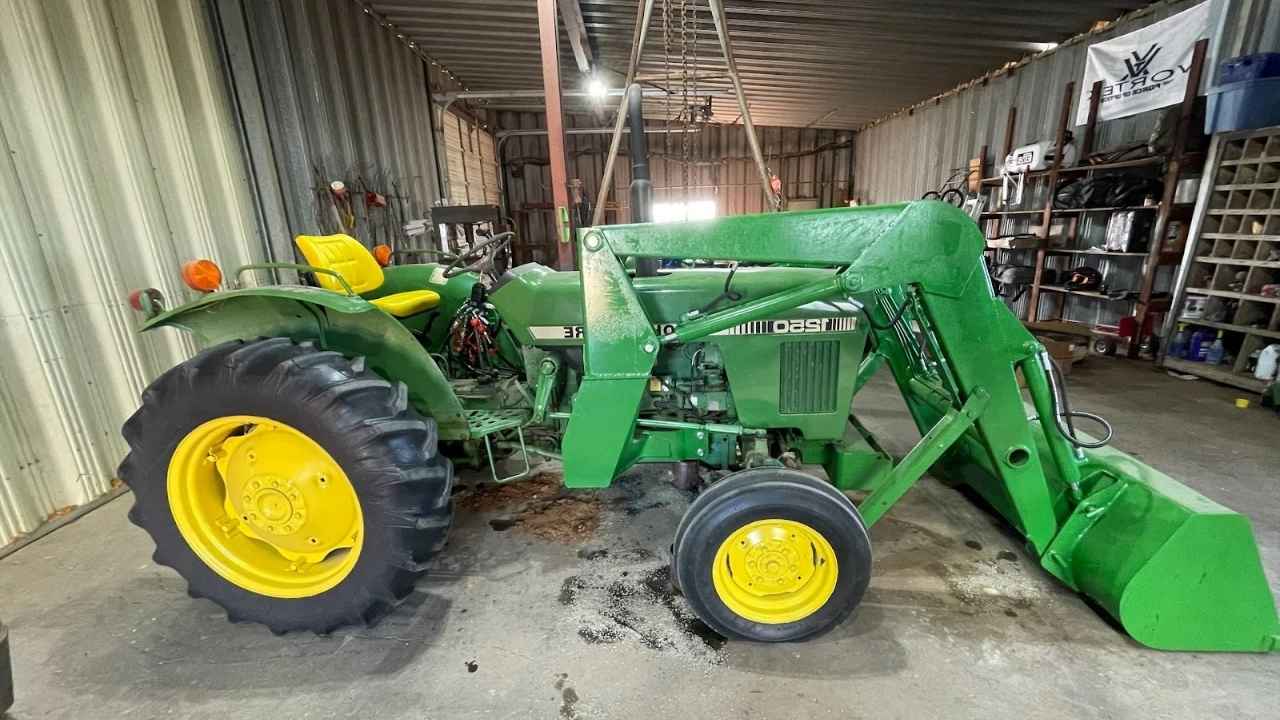
The John Deere 790 is often found with a front-end loader, and that can make the tractor much more useful. TractorData lists common attachments including a 60-inch mid-mount mower deck, blade, front-end loader, and backhoe. (TractorData)
Machinery Pete lists loader options such as the John Deere 419 and John Deere 70, with common bucket widths around 48 inches and 53 inches. It also lists loader lift values such as 610 to 755 lb to full height at the pin, depending on loader configuration. (machinerypete.com)
Best attachments for the John Deere 790 include:
- Front-end loader
- 4-foot or 5-foot rotary cutter
- 5-foot finish mower
- Box blade
- Rear blade
- Landscape rake
- Post hole digger
- Small tiller
- Snow blade
- Mid-mount mower
- Small backhoe attachment
The key is to avoid oversized implements. The 790 works best when matched with compact tractor equipment, not full-size utility tractor attachments.
What Can a John Deere 790 Do?
The John Deere 790 compact tractor is best suited for practical property work. It can handle mowing, grading, light loader work, garden preparation, small pasture maintenance, snow removal, and general small-farm chores.
It is a good fit for:
- Small farms
- Hobby farms
- Horse properties
- Hunting land
- Food plots
- Rural homes
- Small orchards
- Driveway maintenance
- Light landscaping
- Property cleanup
It is not the right tractor for heavy commercial farming, large hay operations, or constant heavy loader work. Think of it as a rugged compact tractor, not a full agricultural tractor.
John Deere 790 Pros
The biggest advantage of the 790 is simplicity. It does not rely on unnecessary electronics or complicated controls. For many used buyers, that is a major selling point.
Key advantages include:
- Simple mechanical design
- Reliable Yanmar diesel engine
- Good fuel efficiency
- Strong reputation on the used market
- Compact size for tight areas
- Useful PTO and 3-point hitch
- Good attachment compatibility
- 4WD versions are very capable for small acreage
- Easier to maintain than more complex newer tractors
For buyers who want a straightforward machine, the 790 still makes a lot of sense.
John Deere 790 Cons
The 790 is not perfect. Its biggest weakness is also part of its identity: it is basic.
Possible disadvantages include:
- No hydrostatic transmission in most configurations
- Gear drive may be less convenient for loader work
- Limited hydraulic flow compared with newer tractors
- Modest loader lift capacity
- Not ideal for large round bales
- Older units may need maintenance catch-up
- Operator comfort is basic
- Parts and condition vary heavily by used machine
If you want a smooth, modern compact tractor with premium comfort, a newer model may be a better fit. But if you want a dependable work tractor, the 790 remains attractive.
Common John Deere 790 Problems to Check Before Buying
When shopping for a used John Deere 790, condition matters more than age alone. A well-maintained tractor with higher hours can be a better buy than a neglected low-hour machine.
Check these areas carefully:
1. Clutch and Gear Shifting
Because the 790 uses a gear transmission, test every gear. Make sure it shifts properly and does not grind excessively. Check clutch engagement and listen for unusual noises.
2. Loader Pins and Bushings
If the tractor has a loader, inspect pins, bushings, bucket edges, hydraulic cylinders, and weld points. A loose loader can indicate hard use.
3. Hydraulic Leaks
Look around hoses, cylinders, fittings, and the hydraulic filter area. The hydraulic system uses Hy-Gard fluid, and John Deere’s filter overview lists the transmission and hydraulic system capacity at about 15 L / 4 gal.
4. Engine Starting and Smoke
A healthy Yanmar diesel should start well, idle smoothly, and avoid excessive smoke after warm-up. White smoke, hard starting, or heavy blow-by can signal problems.
5. Front Axle on 4WD Models
On MFWD tractors, inspect the front axle, steering components, seals, and differential area. Loader-equipped 4WD tractors often work harder than basic mowing tractors.
6. PTO Operation
Test the rear PTO with an implement if possible. Make sure engagement is smooth and there are no strange sounds under load.
7. Maintenance Records
John Deere’s filter guide lists engine oil filter replacement initially after 50 hours and then every 200 hours, with the fuel filter and hydraulic oil filter service intervals shown at 500 hours after initial service where applicable.
John Deere 790 Maintenance Notes
Basic maintenance is one reason the 790 remains popular. John Deere’s filter overview lists useful service and capacity references, including:
| Service Item | Reference Detail |
|---|---|
| Fuel Tank Capacity | About 6.3 gal / 24 L |
| Cooling System | About 1.25 gal / 4.8 L |
| Engine Crankcase with Filter | About 1.08 gal / 4.1 L |
| Transmission and Hydraulic System | About 4 gal / 15 L |
| Engine Oil Filter | M806419 |
| Hydraulic Oil Filter | RE27284 |
These capacity figures come from John Deere’s compact utility tractor filter overview for the 790.
Is the John Deere 790 Good for Loader Work?
Yes, but within reason. A John Deere 790 with 4WD and a properly matched loader is very useful for moving mulch, gravel, firewood, manure, soil, snow, and light materials.
However, buyers should not expect skid steer-level performance. Loader lift capacity is limited compared with larger compact and utility tractors. If your main job is lifting heavy pallets, large logs, or round bales, a bigger tractor is the safer choice.
For loader work, look for:
- 4WD
- Power steering
- Rear ballast
- Good front tires
- Tight loader pins
- No hydraulic leaks
- Proper bucket size
A 2WD 790 without a loader may still be a good mowing and grading tractor, but the 4WD loader version is usually more valuable.
Is the John Deere 790 Good for Mowing?
Yes. The 790 can be a very good mowing tractor when matched with the right mower. It can run a mid-mount mower when equipped correctly, and it can also handle rear finish mowers or small rotary cutters.
For rough mowing, a 4-foot rotary cutter is a safe match in heavy conditions. A 5-foot cutter may work in lighter material, but thick grass, brush, hills, and wet ground can push the tractor harder.
For lawn-style mowing, turf tires and a finish mower setup may be better than ag tires and a brush cutter.
John Deere 790 vs Modern Compact Tractors
Compared with many newer compact tractors, the John Deere 790 feels more basic. Newer machines may offer hydrostatic drive, better ergonomics, stronger loaders, more comfortable operator platforms, and improved hydraulic performance.
But the 790 has one major advantage: it is simple. There is less technology to troubleshoot, fewer complicated systems, and a strong reputation for reliability.
Choose a John Deere 790 if you want:
- Simple controls
- Gear-drive durability
- A proven Yanmar diesel
- Lower used price than many newer models
- Compact utility performance without unnecessary complexity
Choose a newer compact tractor if you want:
- Hydrostatic transmission
- Better loader specs
- More comfort
- Easier operation for beginners
- Dealer-supported newer financing options
What Is a John Deere 790 Worth?
Used John Deere 790 values depend heavily on year, hours, condition, loader, 4WD, tires, and local demand. A clean 4WD tractor with loader usually sells for much more than a 2WD tractor without attachments.
When comparing prices, pay attention to:
- Hours
- 4WD vs 2WD
- Loader included or not
- Tire condition
- Maintenance history
- Leaks or clutch issues
- Included implements
- Overall cosmetic condition
- Dealer vs private seller
A cheap 790 can become expensive if it needs tires, clutch work, hydraulic repairs, or loader repairs.
Who Should Buy a John Deere 790?
The John Deere 790 is best for someone who wants a durable compact tractor for real property work but does not need a large utility tractor.
It is a smart match for:
- 2–20 acre landowners
- Small farms
- Gardeners
- Food plot owners
- Horse property owners
- Rural homeowners
- Light-duty landscapers
- Buyers who prefer simple mechanical tractors
It is not the best match for:
- Large hay farms
- Heavy round bale handling
- Commercial loader work
- Users who strongly prefer hydrostatic drive
- Operators needing high hydraulic flow
- Large tillage or row-crop operations
Is the John Deere 790 Still a Good Tractor?
Yes, the John Deere 790 is still a good compact utility tractor if you understand what it is built to do. It is not the most comfortable or modern machine, but it is dependable, simple, and capable for small-acreage work.
For mowing, grading, light loader use, food plots, garden work, snow removal, and general property maintenance, the 790 remains a strong used-tractor option. The best version to look for is usually a 4WD John Deere 790 with a front-end loader, good tires, clean hydraulics, and clear maintenance history.
If you want a basic compact tractor with proven Yanmar diesel power, the John Deere 790 deserves a serious look.