
Contents
- 1 What Is the USDA June Agricultural Survey?
- 2 Why the 2026 USDA Farmer Survey Matters
- 3 What Farmers Will Be Asked
- 4 Key USDA Reports Connected to the Survey
- 5 Why June 30 Is an Important Date
- 6 How USDA Crop Data Can Affect Tractor and Equipment Demand
- 7 Why Tractor Dealers Should Watch the 2026 Survey
- 8 Why Farmers Should Pay Attention
- 9 What Small Farmers and Landowners Should Watch
- 10 2026 Used Tractor Market Connection
- 11 FAQ: USDA Farmer Survey 2026
- 11.1 What is the USDA Farmer Survey 2026?
- 11.2 Why is the USDA surveying 90,000 farmers?
- 11.3 When will the USDA release the 2026 survey results?
- 11.4 Why does the Acreage Report matter?
- 11.5 Why does the Grain Stocks Report matter?
- 11.6 Can USDA crop reports affect tractor prices?
- 11.7 Should tractor dealers follow USDA reports?
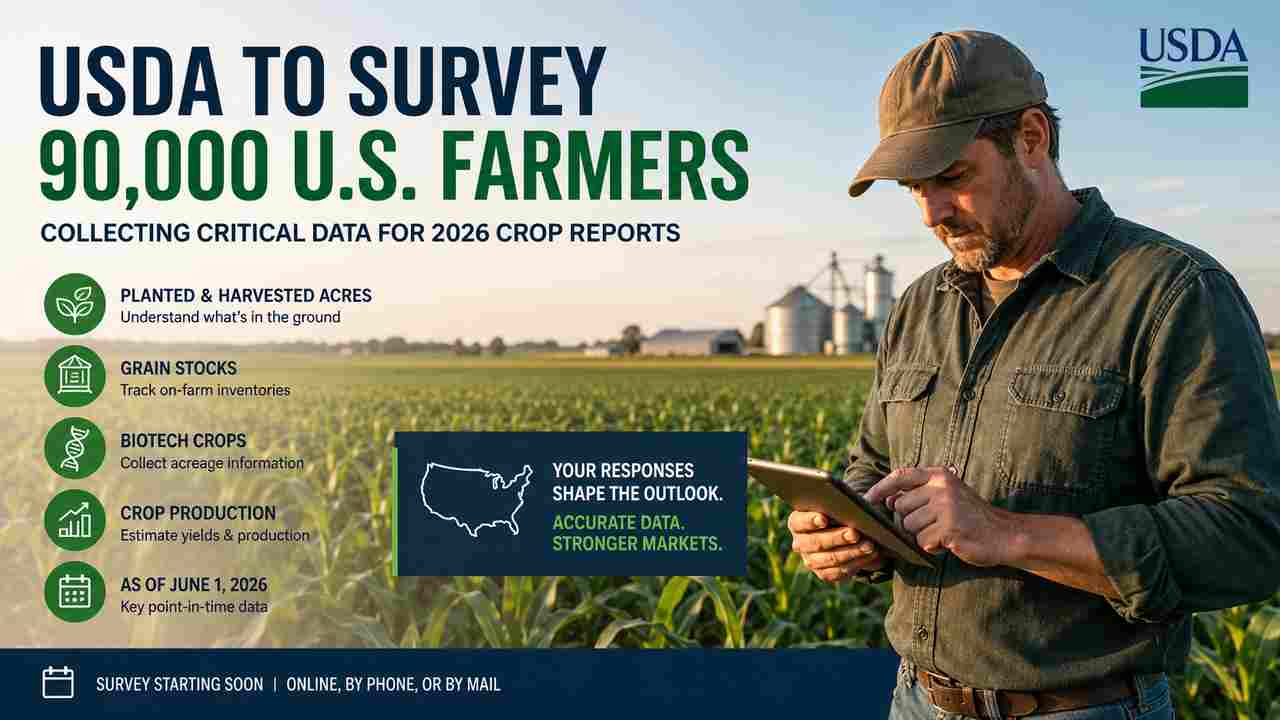
The USDA’s National Agricultural Statistics Service will contact more than 90,000 U.S. farmers and ranchers as part of the 2026 June Agricultural Survey, one of the most important crop data collection efforts of the year. The survey will gather information on planted acreage, harvested acreage, grain stocks, biotech crop usage, livestock, land use, and production expectations.
For farmers, grain traders, tractor dealers, equipment buyers, and anyone watching the agricultural economy, this survey matters. The data collected will help shape major USDA reports, including the Acreage Report and Grain Stocks Report, both scheduled for release on June 30, 2026.
This is not just another government survey. The information farmers provide can influence commodity markets, farm planning, crop price expectations, equipment demand, and even decisions about whether producers buy new machinery, repair older equipment, or look for used tractors in 2026.
What Is the USDA June Agricultural Survey?
The USDA June Agricultural Survey is one of the largest and most influential farmer surveys conducted each year. It is designed to collect up-to-date information directly from producers across the United States during a critical point in the growing season.
By June, most spring planting decisions have already been made. Farmers have a clearer picture of how many acres they planted, what crops they prioritized, and how weather, input costs, and market conditions affected their choices.
The USDA uses this survey to understand:
- how many acres farmers planted
- which crops are expected to be harvested
- how much grain is stored on farms
- how planting decisions changed from earlier expectations
- how biotech crops are being used
- how livestock and land use trends are developing
The results help create a more accurate picture of U.S. agriculture heading into the second half of the year.
Why the 2026 USDA Farmer Survey Matters
The 2026 survey comes at an important time for American agriculture. Farmers are dealing with changing input costs, uncertain commodity prices, high equipment expenses, and shifting demand for both new and used farm machinery.
When margins tighten, producers become more careful with every major decision. That includes seed, fertilizer, fuel, land, labor, and equipment.
The USDA survey helps answer a critical question:
What are farmers actually doing in the field right now?
Planting intentions from earlier in the year are useful, but they are not final. Weather delays, market changes, and regional conditions can force farmers to adjust acreage before or during planting. The June survey helps update those numbers with real-world information from producers.
That updated data can affect:
- corn and soybean market expectations
- wheat supply outlooks
- grain storage decisions
- feed cost projections
- farm income forecasts
- machinery demand
- used tractor and combine activity
- dealer inventory planning
For producers, this data helps create a clearer market picture. For equipment dealers, it can indicate whether farmers are likely to invest, repair, delay purchases, or shop the used equipment market.
What Farmers Will Be Asked
Farmers selected for the survey may be asked to report several types of information. The exact questions can vary, but the survey commonly focuses on acreage, production, storage, and farm operation details.
Producers may be asked about:
- planted acres by crop
- expected harvested acres
- acres planted to corn, soybeans, wheat, cotton, sorghum, and other crops
- biotech crop acreage
- grain stored on the farm
- land use and farm operation details
- livestock inventory in some cases
- crop conditions and production expectations
This information is collected from a broad sample of farms to help estimate national and state-level agricultural trends.
For farmers, accuracy matters. Even small reporting errors can affect larger estimates when multiplied across millions of acres. That is why the USDA encourages selected producers to respond carefully and on time.
Key USDA Reports Connected to the Survey
The June Agricultural Survey helps support several major USDA reports that markets watch closely. These reports can influence crop prices, trading activity, farm planning, and equipment decisions.
| USDA Report | Expected Release | Why It Matters |
|---|---|---|
| Acreage Report | June 30, 2026 | Shows updated planted and harvested acreage estimates |
| Grain Stocks Report | June 30, 2026 | Measures grain stored on farms and off-farm locations |
| Crop Production Reports | Seasonal / monthly | Tracks production expectations and yield outlooks |
| WASDE Report | Monthly | Updates supply, demand, exports, stocks, and price forecasts |
| Farms and Land in Farms | Annual | Tracks farm numbers, land use, and structural trends |
| Livestock Reports | Varies | Helps estimate animal inventory and production trends |
The Acreage Report and Grain Stocks Report are especially important because they can quickly shift market expectations.
If planted acreage comes in higher or lower than expected, prices may react. If grain stocks are tighter than analysts predicted, buyers and sellers may adjust their plans. These changes can ripple through the entire agricultural economy.
Why June 30 Is an Important Date
June 30 is one of the most closely watched USDA report days of the year. The release of acreage and grain stocks data gives the market a clearer view of crop supply heading into summer.
For corn, soybeans, wheat, and other major crops, acreage estimates can change the supply outlook almost immediately.
For example:
If corn acreage is higher than expected, the market may anticipate a larger crop supply. If soybean acreage is lower than expected, buyers may begin watching supply more closely. If grain stocks are tighter than expected, it may signal stronger usage or reduced available supply.
Farmers use this information to evaluate pricing strategies, storage decisions, and marketing plans.
But the impact does not stop with crops.
How USDA Crop Data Can Affect Tractor and Equipment Demand
At first glance, a USDA crop survey may not seem directly connected to tractors. But in reality, crop reports and machinery markets are closely linked.
When USDA data suggests stronger crop potential, better farm income expectations, or improved market confidence, some producers may feel more comfortable investing in equipment. That could mean buying a newer tractor, upgrading a combine, replacing implements, or expanding capacity.
On the other hand, if reports point to tighter margins, uncertain prices, or weaker profitability, many farmers may delay large purchases. Instead of buying new equipment, they may:
- repair existing tractors
- buy used tractor parts
- search for salvage components
- purchase pre-owned equipment
- postpone upgrades
- extend the life of current machines
- rent or lease equipment when needed
That is why the 2026 USDA farmer survey matters for tractor owners and dealers. It helps provide context for the broader farm economy.
If producers become more cautious, the used tractor market may remain active. If confidence improves, dealers may see more interest in both new and late-model used equipment.
Why Tractor Dealers Should Watch the 2026 Survey
For tractor dealers, the USDA survey can provide useful clues about future customer behavior.
Farmers make machinery decisions based on more than horsepower and features. They look at crop prices, operating costs, interest rates, income expectations, and acreage plans.
If a farmer expects strong production and stable prices, they may be more willing to invest in equipment. If the outlook is uncertain, they may choose repairs over replacements.
Dealers should pay attention to:
- crop acreage trends
- regional planting shifts
- grain stock levels
- commodity price reactions
- used equipment demand
- parts and service activity
- financing conditions
A dealership with strong parts and service support may benefit even when new equipment sales slow. In uncertain years, farmers often spend money keeping older machines running rather than buying new ones.
That means demand may increase for:
- tractor repair services
- used tractor parts
- hydraulic repairs
- engine rebuilds
- combine parts
- tire replacement
- maintenance packages
- salvage equipment components
The USDA survey helps dealers understand whether farmers are likely to invest, repair, or wait.
Why Farmers Should Pay Attention
Farmers selected for the survey play an important role in shaping agricultural data. Their responses help create reports used by producers, lenders, analysts, dealers, grain buyers, policymakers, and agribusinesses.
Accurate reporting helps everyone make better decisions.
For individual farmers, the survey results can also help with planning. Once the June 30 reports are released, producers can compare national and regional trends with their own operation.
This can help answer questions like:
- Are other farmers planting more corn or soybeans?
- Are grain stocks tighter than expected?
- Could crop prices become more volatile?
- Should I store grain or sell earlier?
- Is this a good year to delay equipment purchases?
- Should I repair my current tractor instead of buying new?
- Will used equipment prices remain strong?
In a year where every dollar matters, better information can lead to better decisions.
What Small Farmers and Landowners Should Watch
The USDA survey is not only important for large commercial farms. Small farmers, hobby farmers, rural landowners, and equipment buyers can also benefit from understanding the results.
If the used equipment market becomes more competitive, prices for reliable pre-owned tractors may stay firm. If more farmers choose repairs over replacements, demand for used tractor parts and salvage yard components may increase.
Small acreage owners looking for affordable tractors should watch for:
- used compact tractor availability
- dealer trade-ins
- auction prices
- salvage parts demand
- seasonal price changes
- financing options
- parts availability for older models
A shift in the broader farm economy can influence what small buyers pay for equipment.
2026 Used Tractor Market Connection
The 2026 farm equipment market is already showing signs of a more cautious buyer environment. Many producers are weighing whether to buy new, buy used, repair older machines, or search for cheaper replacement parts.
USDA crop data may strengthen or weaken those decisions.
If reports suggest a profitable crop year, some farmers may move forward with purchases. If uncertainty remains high, used tractors and salvage parts may become even more attractive.
This is especially important for owners of older machines from brands like:
- John Deere
- Kubota
- New Holland
- Case IH
- Ford
- Massey Ferguson
- International Harvester
- Mahindra
- Kioti
When new equipment becomes expensive, older tractors stay in service longer. That increases demand for used OEM parts, compact tractor salvage yards, hydraulic components, PTO parts, transmissions, and engine parts.
FAQ: USDA Farmer Survey 2026
What is the USDA Farmer Survey 2026?
The USDA Farmer Survey 2026 refers to the June Agricultural Survey conducted by the National Agricultural Statistics Service. It collects data from more than 90,000 U.S. producers about acreage, grain stocks, crop production, biotech crops, land use, and related agricultural information.
Why is the USDA surveying 90,000 farmers?
The USDA surveys a large number of farmers to create accurate national and state-level agricultural estimates. These estimates support major reports used by farmers, markets, policymakers, lenders, and agricultural businesses.
When will the USDA release the 2026 survey results?
Key results connected to the June Agricultural Survey are expected in the Acreage Report and Grain Stocks Report, scheduled for June 30, 2026.
Why does the Acreage Report matter?
The Acreage Report shows updated estimates of planted and harvested acres. These numbers can affect supply expectations for crops like corn, soybeans, wheat, cotton, and other commodities.
Why does the Grain Stocks Report matter?
The Grain Stocks Report shows how much grain is stored on farms and in commercial facilities. This helps the market understand available supply and usage trends.
Can USDA crop reports affect tractor prices?
Indirectly, yes. USDA crop reports can influence farm income expectations and market confidence. When farmers feel more financially secure, they may invest in equipment. When margins are tight, they may delay purchases, buy used tractors, or repair existing machines.
Should tractor dealers follow USDA reports?
Yes. Tractor dealers can use USDA reports to better understand farmer confidence, regional crop trends, and potential demand for new equipment, used tractors, parts, and repair services.
The USDA Farmer Survey 2026 is more than a data collection effort. It is a key part of how the agricultural industry understands what is happening across U.S. farms during one of the most important periods of the growing season.
By contacting more than 90,000 farmers and ranchers, USDA will gather information that helps shape the Acreage Report, Grain Stocks Report, and other major agricultural estimates.
For farmers, the results can influence marketing plans, storage decisions, and equipment strategies. For tractor dealers, they can provide valuable insight into whether producers are likely to buy new machinery, search for used tractors, or repair existing equipment.
As 2026 crop reporting enters a critical phase, one thing is clear: accurate farm data matters.
It affects markets. It affects planning. And for many producers, it may even affect the next tractor decision they make.