
Contents
- 1 What Farm Equipment Should You Buy First?
- 2 Why Farm Equipment Matters?
- 3 How to Choose the Right Farm Equipment?
- 4 New vs. Used Farm Equipment
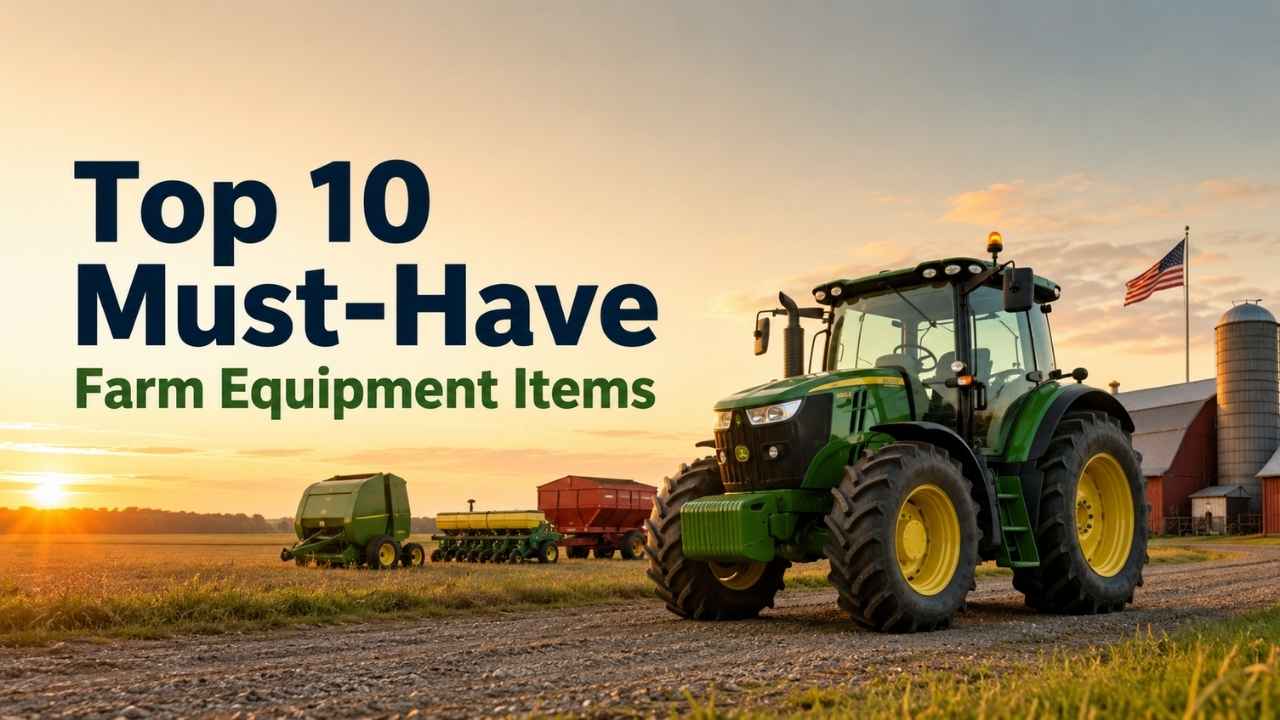
- 5 Top 10 Must-Have Farm Equipment Items
- 6 2. Plows and Harrows
- 7 3. Seeders and Planters
- 8 4. Harvesting Equipment
- 9 5. Irrigation Systems
- 10 6. Tillage Equipment
- 11 7. Manure Spreaders
- 12 8. Balers
- 13 9. Hay Equipment
- 14 10. Farm Trailers
- 15 Where to Find Farm Equipment for Sale
- 16 Farm Equipment Buying Checklist
- 17 Best Starter Equipment for a Small Farm
- 18 Common Mistakes to Avoid When Buying Used Farm Equipment
If you are searching for farm equipment for sale, you are probably not just browsing for fun. You may need a dependable tractor, a better hay setup, a used planter, a farm trailer, or an affordable piece of machinery that can help you get more work done without draining your budget.
The challenge is simple: farm equipment is expensive, and the wrong purchase can cost you more in repairs, downtime, fuel, and frustration.
That is why this guide focuses on the equipment that actually matters on working farms. Whether you run a small acreage property, a livestock operation, a hay farm, or a larger crop farm, these ten equipment categories are the ones most buyers should understand before spending money.
What Farm Equipment Should You Buy First?
For most farms, the first essential purchase is a reliable tractor. After that, your priorities depend on your operation.
| Farm Type | Most Important Equipment |
|---|---|
| Small acreage or hobby farm | Compact tractor, loader, mower, trailer |
| Livestock farm | Tractor, manure spreader, hay equipment, trailer |
| Hay operation | Mower, rake, tedder, baler, bale spear |
| Row crop farm | Tractor, planter, tillage tools, sprayer, harvester |
| Vegetable farm | Tractor, seeder, irrigation system, trailer |
| Restoration or collector use | Old tractor, antique tractor, vintage implements |
If you are buying used, inspect condition first and price second. A cheap machine with major hidden problems is rarely a bargain.
Why Farm Equipment Matters?
Good equipment does three things: saves time, reduces labor, and helps you complete work at the right moment.
That timing is critical in agriculture. Plant too late, and yield may suffer. Miss a hay weather window, and quality drops. Lose a tractor during a busy week, and every other job gets pushed back.
This is why searches like used farm equipment near me, ag equipment for sale, and used farm machinery for sale are so common. Farmers are not only looking for machines. They are looking for dependable tools that keep the operation moving.
How to Choose the Right Farm Equipment?
Before buying any piece of agricultural equipment for sale, ask these five questions:
- Does this machine match my acreage and workload?
- Can my current tractor pull or power it?
- Are parts still easy to find?
- Can I inspect or test it before buying?
- Will it save enough time or money to justify the cost?
A machine does not have to be new to be valuable. In many cases, well-maintained used ag equipment can deliver excellent value, especially if it comes from a known brand with strong parts support.
New vs. Used Farm Equipment
Both new and used equipment can make sense. The best choice depends on your budget, repair skills, and how often you will use the machine.
| Option | Best For | Watch Out For |
|---|---|---|
| New equipment | Daily use, warranty needs, dealer support | Higher price, depreciation |
| Used equipment | Budget-conscious buyers, seasonal use | Wear, repairs, unknown history |
| Older tractors | Simple repairs, light work, collectors | Parts availability, safety features |
| Restored tractors | Shows, collectors, light-duty use | Price may reflect appearance more than function |
| Auction equipment | Potential bargains | Limited testing, fast decisions |
If you are looking at old tractors for sale, vintage tractors for sale, or antique tractors for sale, do not buy based on paint alone. A shiny tractor can still have weak hydraulics, worn gears, poor compression, or electrical issues.
Top 10 Must-Have Farm Equipment Items
1. Tractors
A tractor is the most important piece of equipment on many farms. It can mow, pull implements, move hay, run PTO equipment, haul trailers, handle loader work, and support dozens of daily jobs.
When comparing tractors, focus on practical fit rather than size alone.
| What to Check | Why It Matters |
|---|---|
| Horsepower | Determines what implements the tractor can handle |
| PTO horsepower | Important for balers, mowers, tillers, and augers |
| Hydraulics | Needed for loaders and modern implements |
| Transmission | Affects ease of use and field performance |
| Tires | Replacement can be expensive |
| Loader compatibility | Crucial for livestock, hay, and property work |
| Hours | Gives a rough idea of use, but condition matters more |
| Parts support | Essential for older machines |
Old Tractors for Sale: Are They Still Worth Buying?
Yes, many old tractors are still worth buying if they are mechanically sound and parts are available.
Older tractors from John Deere, Ford, Farmall, Massey Ferguson, Oliver, Case, and Allis-Chalmers remain popular because many are simple, rugged, and easier to repair than newer machines packed with electronics.
However, an old tractor is not always the cheapest option long term. Before buying one, check:
- Cold start behavior
- Engine smoke
- Oil leaks
- Transmission shifting
- PTO operation
- Brake strength
- Steering play
- Hydraulic lift performance
- Tire condition
- Serial number and model plate
If you are searching for old farm tractors for sale, old used tractors for sale, or cheap old tractors for sale, bring someone who knows tractors if you are not comfortable inspecting them yourself.
Antique and Vintage Tractors
There is also a strong collector market for antique tractors, vintage tractors, antique farm tractors for sale, and john deere antique tractors for sale.
These tractors are often bought for restoration, parades, shows, light property work, or nostalgia. For collector value, originality matters. Correct sheet metal, serial numbers, paint scheme, wheels, badges, and model details can all affect price.
2. Plows and Harrows
Plows and harrows prepare soil for planting. They help break ground, manage residue, smooth rough areas, and create a better seedbed.
Common options include:
| Equipment | Main Use |
|---|---|
| Moldboard plow | Turns soil deeply |
| Chisel plow | Breaks compaction with less soil inversion |
| Disc harrow | Cuts residue and breaks clods |
| Chain harrow | Levels soil and spreads manure |
| Spring-tooth harrow | Loosens and smooths soil |
For small farms, a used disc harrow can be one of the most useful implements to own. Before buying, check the frame, discs, bearings, gangs, and hitch points.
3. Seeders and Planters
Seeders and planters affect crop stand, spacing, and yield potential. A poor planter can waste seed and create uneven emergence.
Seeders are commonly used for pasture, cover crops, small grains, and food plots. Planters are usually more precise and are often used for corn, soybeans, cotton, and other row crops.
When reviewing used agricultural equipment, inspect:
- Seed boxes
- Openers
- Meters
- Closing wheels
- Row units
- Chains and sprockets
- Frame condition
- Depth adjustment
If you plant every year, do not treat the planter as an afterthought. Seed placement is one of the first steps toward a successful crop.
4. Harvesting Equipment
Harvesting equipment varies by farm type. Grain farms may need combines, headers, grain carts, and wagons. Hay farms need mowers, rakes, tedders, balers, and bale handling tools. Specialty farms may need vegetable harvesters, conveyors, or sorting equipment.
Used harvesting equipment can save money, but condition matters a lot because harvest windows are narrow.
Before buying, inspect:
| Component | Why It Matters |
|---|---|
| Belts and chains | Common wear points |
| Bearings | Failure can stop work fast |
| Augers | Worn flighting reduces performance |
| Hydraulics | Leaks cause downtime |
| Electronics | Sensors and monitors can be costly |
| Tires or tracks | Replacement may be expensive |
| Header condition | Directly affects crop intake |
A low-priced harvester is not a deal if it fails when the crop is ready.
5. Irrigation Systems
Irrigation equipment helps protect crops during dry periods and gives farmers more control over water delivery.
Common irrigation options include:
| System | Best Use |
|---|---|
| Drip irrigation | Vegetables, orchards, vineyards |
| Center pivot | Larger row-crop fields |
| Traveling gun | Flexible irrigation for different fields |
| Sprinkler system | Pasture, produce, smaller fields |
| Pump and pipe systems | General water movement |
When buying used irrigation equipment, check pumps, hoses, fittings, nozzles, pipes, reels, corrosion, and leaks.
For dry regions, irrigation may not be optional. It can be the difference between a poor crop and a profitable one.
6. Tillage Equipment
Tillage tools help manage weeds, residue, compaction, and seedbed preparation. The right tool depends on your soil, crop, moisture level, and farming method.
Common tillage equipment includes:
- Field cultivators
- Subsoilers
- Rotary tillers
- Disc rippers
- Soil finishers
- Cultivators
- Chisel plows
When browsing farm machinery for sale, pay close attention to wear parts. Points, shanks, discs, springs, bearings, and blades can add significant cost after purchase.
A used tillage tool may look simple, but repairs can add up quickly if every wear part needs replacement.
7. Manure Spreaders
For livestock farms, a manure spreader turns waste into useful fertilizer. It also saves labor and helps distribute nutrients more evenly across fields.
Common manure spreader types include:
| Type | Best For |
|---|---|
| Ground-drive spreader | Small farms and simple use |
| PTO spreader | More consistent spreading |
| Box spreader | General livestock manure |
| Vertical beater spreader | Better distribution |
| Liquid manure spreader | Dairy and larger operations |
Rust is the biggest issue with used manure spreaders. Inspect the floor, apron chain, beaters, gearbox, tires, and frame. If the floor is rotted or the chain system is worn out, repairs may cost more than expected.
8. Balers
Balers are essential for hay and straw production. Choosing the right baler depends on your livestock, storage, labor, and handling equipment.
| Baler Type | Best For |
|---|---|
| Small square baler | Horse hay, small farms, easy handling |
| Round baler | Cattle farms and larger hay production |
| Large square baler | Commercial hay operations |
When searching for used farm equipment near me, you will often see used balers listed. Some are excellent buys, but others have been heavily used.
Inspect:
- Pickup teeth
- Belts or chains
- Rollers
- Knotters
- Bale chamber
- Hydraulic cylinders
- PTO shaft
- Net wrap or twine system
A baler must work when hay is ready. Reliability matters more than cosmetic appearance.
9. Hay Equipment
Hay equipment includes more than just the baler. To make quality hay, you may need cutting, drying, raking, baling, and handling tools.
Essential hay equipment may include:
| Equipment | Purpose |
|---|---|
| Disc mower | Fast hay cutting |
| Sickle mower | Lower-cost cutting |
| Mower-conditioner | Cuts and crimps hay |
| Tedder | Speeds drying |
| Rake | Builds windrows |
| Bale spear | Moves bales |
| Bale wrapper | Stores baleage |
For used hay tools, inspect gearboxes, cutter bars, belts, hydraulic hoses, tires, and driveline parts.
Hay equipment is especially time-sensitive. A mower or rake breaking down during a short dry window can cost more than the repair bill.
10. Farm Trailers
Farm trailers are simple, but they are used constantly. They help move feed, hay, tools, fencing, produce, livestock supplies, equipment, and materials around the farm.
Common types include:
- Utility trailers
- Flatbed trailers
- Dump trailers
- Livestock trailers
- Bale trailers
- Grain trailers
- Equipment trailers
Before buying a used farm trailer, check:
| Part | What to Inspect |
|---|---|
| Frame | Rust, cracks, weld repairs |
| Deck | Rot, weak boards, soft spots |
| Tires | Dry rot and uneven wear |
| Axles | Capacity and alignment |
| Brakes | Required for heavier loads |
| Lights | Road safety |
| Hitch | Compatibility with your vehicle |
| Ramps | Strength and ease of use |
A good trailer may not be exciting, but it often becomes one of the most useful tools on the farm.
Where to Find Farm Equipment for Sale
There are several good places to find farm equipment for sale in the United States. Each option has advantages and risks.
Online Marketplaces
Online equipment sites make it easy to compare models, prices, locations, and condition. They are useful for searches like:
- used farm equipment near me
- ag equipment for sale
- used ag equipment
- farm machinery for sale
- used farm machinery for sale
- antique farm machinery for sale
- vintage farm machinery for sale
- old farm machinery for sale
Before buying from an online listing, ask for detailed photos, serial numbers, maintenance history, and a video of the machine operating.
Local Dealerships
Dealerships can be a safer option for major purchases. They may offer financing, service records, delivery, parts support, and limited warranties.
A dealer may cost more than a private seller, but the support can be worth it if you depend on the equipment for regular work.
Auctions
Farm auctions can be excellent places to find used tractors, implements, trailers, hay equipment, and older tractors for sale.
The risk is that auction sales are usually fast and final. Inspect before bidding, know your maximum price, and do not get caught in the excitement.
Private Sellers
Private sellers can offer fair prices, especially for older equipment. This is also where you may find classic tractor for sale, used antique tractors for sale, or restored tractors for sale listings.
Ask direct questions:
- Why are you selling it?
- How long have you owned it?
- Does it have known problems?
- Can I see it run?
- Has it been stored indoors?
- Are parts still available?
- Do you have manuals or service records?
A private sale can be a good deal, but only if you inspect carefully.
Farm Equipment Buying Checklist
Use this checklist before making a purchase:
| Question | Why It Matters |
|---|---|
| Does it fit my farm size? | Prevents buying too big or too small |
| Is it compatible with my tractor? | Avoids PTO, hitch, and horsepower issues |
| Are parts easy to find? | Important for used and older machines |
| Can I test it? | Confirms actual condition |
| Is the price fair? | Helps avoid overpaying |
| What repairs are needed? | Shows true cost |
| How will I transport it? | Delivery can be expensive |
| Will it improve my operation? | Keeps the purchase practical |
Best Starter Equipment for a Small Farm
If you are starting small, you probably do not need every machine on this list immediately. A practical starter setup could include:
- Compact or utility tractor
- Front-end loader
- Rotary cutter or finish mower
- Farm trailer
- Box blade or rear blade
- Disc harrow or tiller
- Seeder or broadcast spreader
- Bale spear or pallet forks
This setup can handle mowing, hauling, grading, light field preparation, livestock chores, and property maintenance.
Common Mistakes to Avoid When Buying Used Farm Equipment
The biggest mistake is buying based only on price. A low price can hide expensive repairs.
Avoid these common problems:
- Buying without seeing the machine operate
- Ignoring tire condition
- Forgetting transportation costs
- Overlooking parts availability
- Buying too much horsepower for small jobs
- Buying too little horsepower for heavy work
- Trusting fresh paint too much
- Skipping serial number checks
- Not checking hydraulics or PTO
- Failing to compare similar listings
A good deal should still make sense after inspection, transport, and expected repairs.
Finding the right farm equipment for sale is about more than choosing the cheapest machine. The best equipment is the equipment that fits your land, workload, budget, and long-term plans.
For many farms, the smartest setup is a balanced mix of dependable used machinery, practical implements, and one reliable tractor that can handle daily work. Some buyers may need newer equipment with dealer support. Others may do perfectly well with old tractors, used farm equipment, or carefully chosen vintage tractors.
Whether you are searching for agricultural equipment for sale, old tractors for sale, antique tractors for sale, or used farm equipment near me, take your time. Inspect carefully, compare prices, ask questions, and think about how the machine will actually help your farm.
The right equipment does not just make work easier. It helps protect your time, your crops, your animals, and your bottom line.