
Contents
- 1 What Is a Chip and Seal Driveway?
- 2 Why Chip and Seal Makes Sense for a 1,000-Foot Driveway
- 3 Chip and Seal Driveway Cost for 1,000 Feet
- 4 Pros of a Chip and Seal Driveway
- 5 Cons of a Chip and Seal Driveway
- 6 Chip and Seal vs Gravel Driveway
- 7 Chip and Seal vs Asphalt Driveway
- 8 Is Chip and Seal Good for Tractor and Trailer Traffic?
- 9 How Important Is Drainage?
- 10 Questions to Ask Before Chip Sealing a 1,000-Foot Driveway
- 11 Best Situations for Chip and Seal
- 12 When Chip and Seal May Not Be the Best Choice
- 13 Is Chip and Seal Worth It for a 1,000-Foot Driveway?
A chip and seal driveway, also called a tar and chip driveway, is one of the most practical middle-ground options between a loose gravel driveway and a full asphalt driveway. For landowners with a 1,000-foot driveway, the decision matters even more because every extra foot can significantly affect the total cost.
If you own a rural property, farm, ranch, homestead, or long private road, chip and seal can be a smart option. It offers a cleaner, more finished surface than gravel while usually costing less than asphalt. However, it is not perfect for every property. The real answer depends on your driveway base, drainage, traffic, climate, and maintenance expectations.
What Is a Chip and Seal Driveway?
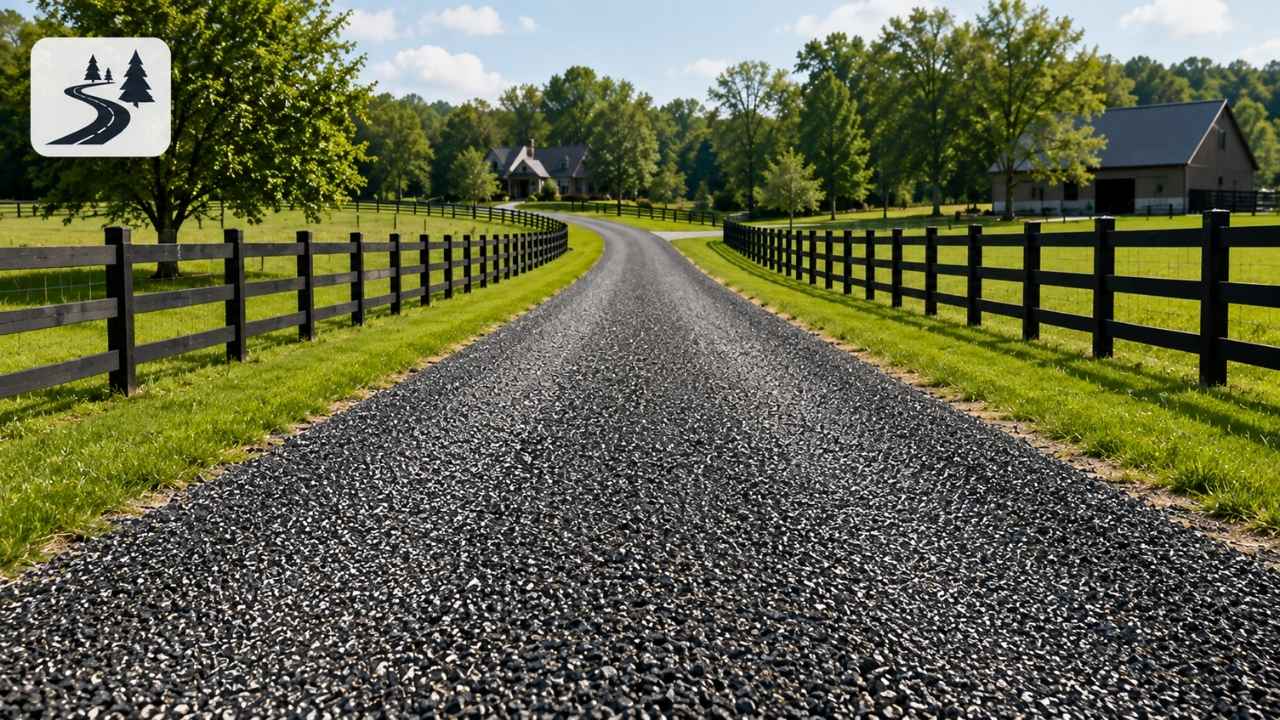
A chip and seal driveway is built by applying a layer of hot liquid asphalt or asphalt emulsion over a prepared surface, then spreading small stone chips on top. The stone is compacted into the binder with a roller, creating a textured, durable driving surface.
Unlike traditional asphalt, chip and seal does not create a smooth blacktop finish. Instead, it has a more natural, stone-covered appearance. That makes it especially popular for rural driveways, farm lanes, long private roads, and country homes.
Why Chip and Seal Makes Sense for a 1,000-Foot Driveway
A 1,000-foot driveway is a major project. Full asphalt can become expensive quickly, especially if the road needs grading, base repair, drainage work, or widening. Gravel may be cheaper upfront, but it often requires repeated grading, dust control, and fresh stone over time.
Chip and seal sits between those two options. It gives you a more stable surface than gravel without the higher cost of full asphalt.
For long driveways, chip and seal is often attractive because it can:
- Reduce dust compared to gravel
- Improve curb appeal
- Provide better surface stability
- Lower maintenance compared to loose stone
- Cost less than traditional asphalt
- Blend naturally with rural properties
Chip and Seal Driveway Cost for 1,000 Feet
The cost of a chip and seal driveway depends on the width of the driveway, the condition of the existing base, local material prices, labor, and whether you choose a single or double chip seal application.
Here is a simple example:
| Driveway Size | Total Square Feet | Cost Consideration |
|---|---|---|
| 1,000 ft x 10 ft | 10,000 sq ft | Narrow rural driveway |
| 1,000 ft x 12 ft | 12,000 sq ft | Common private driveway width |
| 1,000 ft x 14 ft | 14,000 sq ft | Better for trailers and equipment |
If your driveway already has a solid gravel base, the project may cost much less than a full rebuild. However, if the road needs major grading, drainage improvements, or additional base stone, the price can rise quickly.
That is why homeowners should not compare chip and seal pricing by length alone. A 1,000-foot driveway with poor drainage may cost more than a longer driveway with a strong existing base.
Pros of a Chip and Seal Driveway
1. More Affordable Than Asphalt
One of the biggest advantages of a tar and chip driveway is cost. For a long driveway, asphalt can be expensive because of the amount of material and labor involved. Chip and seal usually offers a more budget-friendly option while still creating a more finished surface than gravel.
For property owners with a long driveway, this cost difference can be significant.
2. Less Dust Than Gravel
A gravel driveway can create a lot of dust, especially during dry weather. That dust can cover vehicles, nearby landscaping, garage doors, and even the outside of the house.
Chip and seal helps lock the surface stone in place, which can greatly reduce dust compared to loose gravel.
3. Natural Rural Appearance
Many landowners like the appearance of chip and seal because it does not look too commercial or urban. The stone finish blends well with farms, ranches, wooded properties, cabins, and country homes.
You can also choose different stone colors depending on availability in your area.
4. Better Traction
Because chip and seal has a textured stone surface, it can offer good traction in wet conditions. This can be useful for sloped rural driveways or properties that see regular rain.
However, traction still depends on proper installation, stone type, and ongoing maintenance.
5. Good Option for Long Private Roads
For a 1,000-foot driveway, chip and seal can provide a practical balance between cost, appearance, and performance. It is especially useful when a homeowner wants something better than gravel but does not want to pay for full asphalt paving.
Cons of a Chip and Seal Driveway
1. Not as Smooth as Asphalt
Chip and seal has a rougher surface than asphalt. If you want a perfectly smooth driveway for bikes, scooters, rollerblades, or a luxury blacktop appearance, asphalt may be the better choice.
Chip and seal is practical, but it is not as refined as paved asphalt.
2. Snow Plowing Requires Care
If you live in an area with heavy snow, snow removal is an important concern. A snowplow blade can loosen stone chips if it scrapes too aggressively.
For chip and seal driveways, it is better to keep the plow blade slightly raised or use plow shoes to reduce surface damage.
3. Base Problems Will Still Come Through
Chip and seal is not a magic fix for a bad driveway. If your existing road has potholes, soft spots, standing water, mud, or poor drainage, those problems must be fixed first.
A weak base can cause the surface to fail early.
4. Shorter Lifespan Than Asphalt
A properly installed chip and seal driveway can last for years, but it generally does not last as long as a high-quality asphalt driveway. It may need resealing or another chip seal layer over time.
For long driveways, this may still be acceptable because the lower upfront cost can make future maintenance easier to justify.
5. Loose Stones at First
After installation, some loose stone is normal. The surface usually settles after traffic and final sweeping. Still, homeowners should expect a short break-in period.
Chip and Seal vs Gravel Driveway
| Feature | Gravel Driveway | Chip and Seal Driveway |
|---|---|---|
| Upfront Cost | Usually lowest | Moderate |
| Dust | High | Lower |
| Maintenance | Frequent grading may be needed | Less frequent |
| Appearance | Basic rural look | More finished rural look |
| Surface Stability | Loose stone can shift | Stone is more locked in |
| Best For | Low-budget access roads | Long private driveways |
If you only need the cheapest possible option, gravel may win. But if you want less dust, better appearance, and reduced maintenance, chip and seal is often worth considering.
Chip and Seal vs Asphalt Driveway
| Feature | Chip and Seal | Asphalt |
|---|---|---|
| Cost | Usually lower | Usually higher |
| Surface Texture | Rough and stone-like | Smooth |
| Appearance | Rural/natural | Clean blacktop |
| Maintenance | Periodic resealing/chip layer | Crack sealing and sealcoating |
| Lifespan | Moderate | Longer when maintained |
| Best For | Long rural driveways | High-use residential driveways |
Asphalt is the better choice if you want a smooth, polished surface and longer service life. Chip and seal is better if you want a more affordable and natural-looking surface for a long driveway.
Is Chip and Seal Good for Tractor and Trailer Traffic?
Chip and seal can work well for tractors, pickup trucks, trailers, compact equipment, and normal rural traffic if the base is strong. The surface itself is only part of the system. The real strength comes from the compacted stone base underneath.
If your driveway regularly handles heavy equipment, ask the contractor about:
- Base depth
- Compaction
- Drainage
- Double chip seal options
- Edge support
- Turning areas for trailers
- Reinforcement for soft spots
Sharp turning with heavy trailers or equipment can disturb the surface, especially when the chip seal is new. Proper curing and careful early use can help prevent damage.
How Important Is Drainage?
Drainage is one of the most important parts of a successful chip and seal driveway installation. Water is the enemy of any driveway surface.
A good driveway should have:
- Proper crown or slope
- Ditches where needed
- Culverts if water crosses the driveway
- No standing water
- Strong edges
- Well-compacted base material
If water sits on the driveway, seeps under the base, or runs across the road uncontrolled, the chip and seal surface can break down faster.
Questions to Ask Before Chip Sealing a 1,000-Foot Driveway
Before hiring a contractor, ask these questions:
- Is my current gravel base strong enough?
- Will grading and compaction be included?
- Do I need a single or double chip seal?
- What type and size of stone will be used?
- How will drainage be handled?
- How long before I can drive on it?
- Is the surface suitable for tractors and trailers?
- How should I handle snow plowing?
- What maintenance will be needed?
- Is sweeping included after installation?
- Are edges reinforced?
- Is there any workmanship guarantee?
These questions can help you avoid poor installation and unexpected costs.
Best Situations for Chip and Seal
A chip and seal driveway is a strong choice when:
- You have a long rural driveway
- You want less dust than gravel
- Asphalt is too expensive
- The driveway already has a good base
- You like a natural stone appearance
- Traffic is moderate
- Drainage is already good or can be improved
When Chip and Seal May Not Be the Best Choice
Chip and seal may not be ideal if:
- You want a smooth blacktop surface
- You use small-wheeled equipment often
- Your driveway has major drainage problems
- Heavy snow plowing is frequent
- The base is weak or muddy
- You expect heavy commercial traffic
- You do not want any loose stone during the settling period
Is Chip and Seal Worth It for a 1,000-Foot Driveway?
For many rural property owners, chip and seal is worth it for a 1,000-foot driveway. It can reduce dust, improve appearance, and create a more stable surface than gravel without the high cost of full asphalt.
However, the success of the project depends heavily on preparation. A strong gravel base, proper drainage, good grading, and an experienced contractor are essential. If the base is weak, chip and seal will not solve the problem by itself.
In simple terms: chip and seal is a smart option when the foundation is solid and the goal is a durable, affordable, rural-friendly driveway surface.