
Contents
A 12 volt hydraulic pump is one of the most practical power units for mobile equipment. You see it on dump trailers, dump trucks, snow plows, liftgates, bale beds, small dump beds, hydraulic jacks, and custom fabrication projects. The reason is simple: it runs from a 12V battery and delivers hydraulic pressure without needing a PTO shaft, gas engine, or large industrial power source.
If you need compact hydraulic power for lifting, tilting, pushing, or dumping, a 12 volt electric hydraulic pump can be a smart solution. But not every pump is the same. Before buying one, you need to understand flow rate, pressure, reservoir size, single acting vs double acting operation, wiring, duty cycle, and application fit.
What Is a 12 Volt Hydraulic Pump?
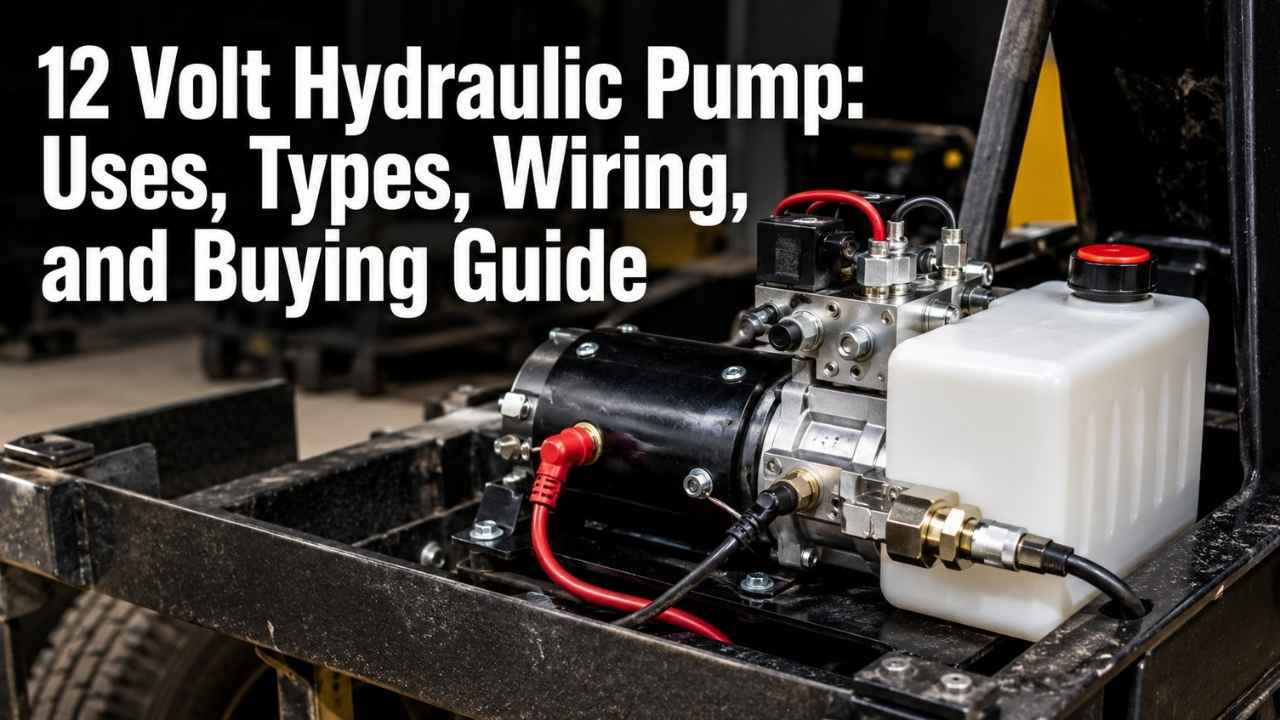
A 12 volt hydraulic pump is an electrically powered hydraulic power unit that uses a 12V DC motor to drive a hydraulic pump. The pump moves hydraulic fluid from a reservoir into a cylinder or hydraulic circuit.
A typical unit may include:
-
12V DC motor
-
hydraulic pump
-
reservoir
-
control valve
-
wiring terminals
-
relief valve
-
hydraulic ports
Many buyers search for 12 volt dc hydraulic pump, hydraulic pump 12 volt, or hydraulic 12 volt pump. These terms usually refer to the same basic product category.
What Is a 12 Volt Hydraulic Pump Used For?
A 12 volt hydraulic pump is used when equipment needs hydraulic power but only has access to a battery or vehicle electrical system.
Common uses include:
-
dump trailers
-
dump trucks
-
snow plows
-
liftgates
-
bale beds
-
hay spear systems
-
hydraulic ramps
-
small cranes
-
utility beds
-
custom hydraulic projects
For example, a 12 volt hydraulic pump for dump trailer lifts the trailer bed so material can be dumped. A 12 volt hydraulic pump for snow plow raises, lowers, or angles the plow. A 12 volt hydraulic pump for bale bed can operate hydraulic arms or lifting functions.
For dump-specific applications, see our 12 Volt Dump Trailer Hydraulic Pump Guide
Small vs Heavy Duty 12 Volt Hydraulic Pump
Not every pump is built for the same workload. A small 12 volt hydraulic pump may be enough for light lifting or compact equipment. A heavy duty 12 volt hydraulic pump is better for larger cylinders, heavier loads, or frequent operation.
When comparing pumps, check:
-
maximum PSI
-
flow rate in GPM
-
reservoir capacity
-
motor power
-
duty cycle
-
port size
-
valve type
-
single acting or double acting setup
-
remote control options
A cheap pump may work for occasional use, but if you use it daily, a stronger unit is worth the money.
12 Volt Electric Hydraulic Pump vs Manual Pump
A 12 volt electric hydraulic pump saves time and effort. Instead of using a manual hydraulic jack or hand pump, you press a switch or remote and the electric motor powers the system.
This is especially useful for dump trailers, snow plows, and equipment that needs repeated lifting. If you are raising a dump bed multiple times a day, electric power makes a big difference.
Single Acting vs Double Acting
One of the most important choices is whether you need a 12 volt single acting hydraulic pump or a 12 volt double acting hydraulic pump.
A single acting pump sends hydraulic pressure in one direction. The cylinder extends under pressure and usually returns by gravity or spring force. This is common on many dump trailers.
A double acting pump sends hydraulic pressure in both directions. The cylinder can extend and retract under power. This is common on equipment that needs controlled movement both ways.
Reservoir Size Matters
Many buyers look for a 12 volt hydraulic pump with reservoir because the reservoir is part of the complete power unit. The reservoir must hold enough fluid to fully operate the cylinder.
If the reservoir is too small, the pump may suck air, run hot, or fail to fully extend the cylinder. If you already have an external tank, you may look for a 12 volt hydraulic pump without reservoir, but most mobile setups use a self-contained unit.
For more on motors, reservoirs, and replacement parts, see our 12 Volt Hydraulic Pump Motor and Reservoir guide.
Wiring Basics
A 12 volt hydraulic pump wiring diagram usually includes the battery, ground, solenoid, motor, switch, and sometimes a remote control. Wiring must be sized correctly because hydraulic pump motors can draw high current under load.
Basic wiring usually includes:
-
positive cable from battery to solenoid
-
solenoid to motor
-
ground cable from motor to battery or frame
-
control switch wiring
-
fuse or breaker where required
If you are not comfortable with high-current DC wiring, it is safer to have a mechanic or equipment electrician handle it.
For the complete wiring layout, see our 12 Volt Hydraulic Pump Wiring Diagram guide.
What to Look for Before Buying
Before buying a 12 volt hydraulic pump unit, ask:
-
What cylinder size will it run?
-
Is the cylinder single acting or double acting?
-
What PSI is required?
-
What GPM do I need?
-
How much fluid capacity is needed?
-
Will it be used occasionally or daily?
-
Do I need a wireless remote?
-
Is it for a dump trailer, plow, liftgate, or custom project?
The right pump depends on the job, not just the price.
A 12 volt hydraulic pump is a powerful and convenient choice for mobile hydraulic systems. It is compact, battery-powered, and useful for many farm, construction, trailer, and equipment applications.
If your pump is clicking, running slowly, or not building pressure, see our 12 Volt Hydraulic Pump Troubleshooting guide.
For light jobs, a small 12 volt hydraulic pump may be enough. For heavy lifting, choose a heavy duty 12 volt hydraulic pump with the right PSI, GPM, reservoir, and wiring setup. The smartest move is to match the pump to your cylinder, load, and duty cycle before buying.