Contents
- 1 Massey Ferguson 135 Specs
- 2 Massey Ferguson 135 Horsepower
- 3 Massey Ferguson 135 Diesel Specs
- 4 Gas vs Diesel Massey Ferguson 135
- 5 Massey Ferguson 135 Transmission Options
- 6 Massey Ferguson 135 Weight and Size
- 7 Massey Ferguson 135 Tire Size
- 8 Massey Ferguson 135 Value and Price
- 9 Massey Ferguson 135 Parts
- 10 Massey Ferguson 135 Hydraulic System
- 11 Massey Ferguson 135 Loader
- 12 Massey Ferguson 135 Wiring and Electrical Issues
- 13 Massey Ferguson 135 Serial Number Location
- 14 Common Massey Ferguson 135 Problems
- 15 Buying a Used Massey Ferguson 135
- 16 Is the Massey Ferguson 135 Still Worth Buying?
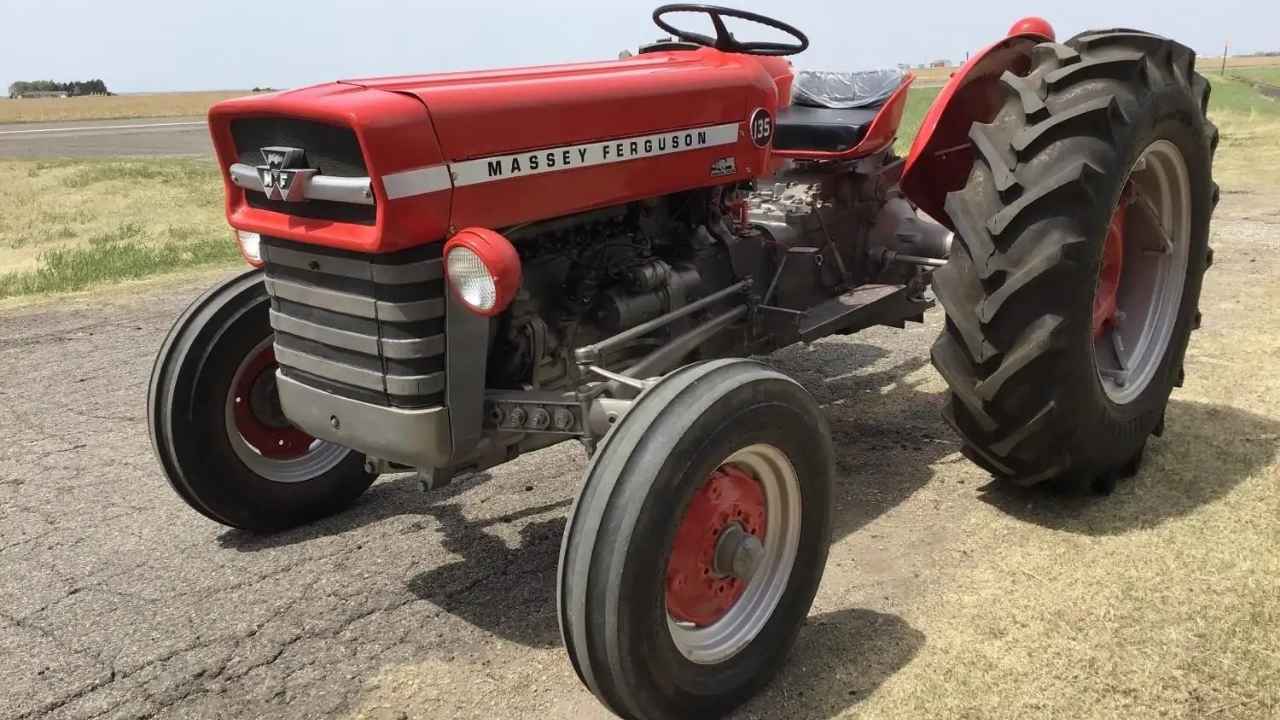
The Massey Ferguson 135 is one of the most respected classic utility tractors ever built. It is simple, durable, easy to work on, and still useful for small farms, acreage owners, hobby farmers, and collectors.
Even though it is an older tractor, the MF 135 still has strong demand because it offers the kind of straightforward mechanical design many buyers want. No complicated electronics. No modern emissions system. Just a practical 2WD tractor that can mow, rake, haul, grade, pull small implements, and handle general property work.
For anyone looking at a Massey Ferguson 135 for sale, the main questions are simple: How much horsepower does it have? What engine does it use? What is it worth today? Are parts easy to find? And what should you check before buying one?
This guide answers those questions clearly.
Massey Ferguson 135 Specs
The Massey Ferguson 135 was built as a compact utility tractor. Specs can vary slightly by year, country, engine, and transmission, but most models fall into the same basic range.
| Specification | Massey Ferguson 135 Details |
|---|---|
| Tractor type | Utility tractor |
| Drive | 2WD |
| Engine horsepower | About 45.5–47 hp |
| PTO horsepower | About 37.7–38 hp |
| Common engines | Perkins diesel, Perkins gas, Continental gas |
| PTO speed | 540 rpm |
| Steering | Manual; power steering optional |
| Brakes | Mechanical drum brakes |
| Operator station | Open station |
| Common transmission options | 6-speed, 8-speed, 12-speed Multi-Power |
| Common use | Mowing, light tillage, hauling, grading, hay work |
TractorData lists the MF 135 at 45.5 engine horsepower, 33 claimed drawbar horsepower, and 38 claimed PTO horsepower for one common version. A newer TractorData listing shows 47 engine horsepower and 37.7 rated PTO horsepower, depending on model details and source data. (TractorData)
Massey Ferguson 135 Horsepower
The Massey Ferguson 135 horsepower rating puts it in the mid-40 hp utility tractor class. That means it is not a large row-crop tractor, but it is more than enough for many small-farm jobs.
In practical use, the MF 135 can handle:
| Job | Suitability |
|---|---|
| Finish mowing | Good |
| Brush hogging light grass/weeds | Good with correct mower size |
| Raking hay | Good |
| Small square baler work | Possible with proper setup |
| Light plowing/discing | Good for small acreage |
| Box blade / rear blade work | Good |
| Loader work | Possible, but limited compared with modern 4WD tractors |
The key is matching the implement to the tractor. A Massey Ferguson 135 can work hard, but it should not be treated like a modern heavy loader tractor or a high-horsepower row-crop machine.
Massey Ferguson 135 Diesel Specs
The Massey Ferguson 135 diesel is usually the most desirable version. Many buyers prefer the Perkins diesel engine because it has a strong reputation for fuel economy, torque, and long service life.
| Diesel Spec | Detail |
|---|---|
| Engine | Perkins 3-cylinder diesel |
| Displacement | About 2.5L |
| Engine horsepower | About 45.5 hp |
| PTO horsepower | About 38 hp |
| Fuel type | Diesel |
| Best use | Regular farm and utility work |
The diesel version often brings better resale value than the gas version, especially if it starts well, runs cleanly, has good oil pressure, and does not smoke heavily.
Gas vs Diesel Massey Ferguson 135
Both gas and diesel versions can be good tractors, but they appeal to different buyers.
| Version | Best For | Things to Watch |
|---|---|---|
| Diesel MF 135 | Regular work, resale value, fuel economy | Cold starting, injector pump, smoke, blow-by |
| Gas MF 135 | Light use, hobby farms, easier basic fuel repairs | Carburetor issues, ignition problems, fuel system age |
For most buyers, a clean Massey Ferguson 135 diesel is the stronger choice. But a well-maintained gas model can still be a reliable and affordable tractor.
Massey Ferguson 135 Transmission Options
The MF 135 came with several transmission setups. The most common are 6-speed, 8-speed, and 12-speed Multi-Power versions. TractorData lists these transmission options for the model.
| Transmission | What to Know |
|---|---|
| 6-speed | Simple and common |
| 8-speed | Gives more gear flexibility |
| 12-speed Multi-Power | Useful, but repair condition matters more |
When buying, do not focus only on the number of gears. Check how the tractor shifts. It should not grind badly, jump out of gear, slip, or feel weak under load.
Massey Ferguson 135 Weight and Size
The Massey Ferguson 135 weight is usually around the 3,000 lb range, depending on configuration, engine, tires, ballast, and attachments. This makes it heavy enough for useful traction but still small enough for many barns, small fields, and acreage jobs.
If the tractor has filled rear tires, wheel weights, or a loader, the real transport weight can be much higher. Always check the actual machine before choosing a trailer.
Massey Ferguson 135 Tire Size
Rear tire size can vary because many MF 135 tractors have had tires replaced over the years. Common rear tire sizes include sizes around 12.4-28 or 13.6-28, depending on setup and market.
Before buying rear tires, check the size stamped on the sidewall. Do not assume the tractor still has its original tire size.
Massey Ferguson 135 Value and Price
As of 2026, the Massey Ferguson 135 value depends heavily on condition, engine, tires, hydraulics, power steering, loader, and location.
Current U.S. listings show a wide price range. TractorHouse lists used Massey Ferguson 135 tractors from about $1,900 to $10,755, with examples including running tractors around $3,000–$7,000 and higher-priced clean or better-equipped units. Machinery Pete shows current MF 135 listings from about $1,950 to $4,295, which is closer to the typical price range for basic used examples.
| Condition | 2026 Estimated Price Range |
|---|---|
| Non-running / project tractor | $1,500–$2,500 |
| Running but rough | $2,500–$4,000 |
| Good working tractor | $4,000–$6,500 |
| Clean diesel model | $5,500–$8,000 |
| Restored or loader-equipped model | $7,000–$10,000+ |
A cheaper tractor is not always the better buy. Bad rear tires, weak hydraulics, clutch problems, poor wiring, or a tired engine can quickly turn a low purchase price into an expensive repair project.
Massey Ferguson 135 Parts
Parts support is one of the biggest advantages of owning a Massey Ferguson 135. Since the tractor is still widely used, many common replacement parts are available through aftermarket suppliers, salvage yards, online parts stores, and tractor dealers.
Common parts include:
| Part | Why It Matters |
|---|---|
| Oil filter | Routine maintenance |
| Fuel filter | Prevents fuel delivery problems |
| Air filter | Important for dusty mowing and field work |
| Starter | Common age-related replacement |
| Radiator | Needed if overheating or leaking |
| Carburetor | Mainly for gas models |
| Hydraulic pump | Important for weak lift problems |
| Seat | Common comfort/restoration upgrade |
| Wiring harness | Useful when old wiring is damaged |
This strong parts availability makes the MF 135 easier to keep running than many less common vintage tractors.
Massey Ferguson 135 Hydraulic System
The hydraulic system is one of the most important things to check before buying a used MF 135. The 3-point hitch should lift smoothly, hold an implement without dropping quickly, and respond properly to the control lever.
Common hydraulic problems include:
| Problem | Possible Cause |
|---|---|
| 3-point hitch will not lift | Low fluid, worn pump, stuck valve, internal leak |
| Hitch lifts slowly | Dirty oil, weak pump, worn seals |
| Hitch drops under load | Internal leakage or worn cylinder seals |
| Noisy hydraulics | Low oil or pump wear |
| Milky hydraulic oil | Water contamination |
Do not replace the hydraulic pump immediately without checking the basics first. Fluid level, oil condition, filters/screens, linkage adjustment, and leaks should all be inspected.
Massey Ferguson 135 Loader
A Massey Ferguson 135 loader can be useful for light-duty work, but buyers should understand the limits. The MF 135 is a 2WD utility tractor, not a modern 4WD loader machine.
A loader adds stress to the front axle, steering, clutch, brakes, and hydraulics. If you are buying a loader-equipped MF 135, inspect it carefully.
| Loader Area | What to Check |
|---|---|
| Front axle | Wear, cracks, loose parts |
| Steering | Excessive play or hard steering |
| Loader frame | Welds, cracks, mounting points |
| Hydraulics | Slow lift, leaks, weak response |
| Rear ballast | Needed for safer loader use |
| Brakes | Must stop evenly and safely |
For mulch, manure, light gravel, snow, and general property chores, a loader can be handy. For heavy digging or constant loader work, a newer 4WD tractor is a better choice.
Massey Ferguson 135 Wiring and Electrical Issues
Electrical problems are common on older tractors, mostly because wiring gets old, modified, or poorly repaired. A Massey Ferguson 135 wiring diagram can help, but the first step is usually a visual inspection.
Check for:
| Issue | Why It Matters |
|---|---|
| Loose grounds | Can cause no-start or weak charging |
| Brittle wires | Fire and reliability risk |
| Bypassed switches | Safety concern |
| Weak battery cables | Hard starting |
| Poor alternator/generator wiring | Charging problems |
A tractor may still run with messy wiring, but poor electrical work can create frustrating starting and charging issues.
Massey Ferguson 135 Serial Number Location
The Massey Ferguson 135 serial number location is important when confirming the tractor’s year and identity. On many models, the serial plate is found around the dashboard, instrument panel, or lower dash area.
Because these tractors are old, the plate may be painted over, damaged, replaced, or missing. If the serial number is unreadable, check engine tags, casting numbers, and any paperwork the seller has.
Common Massey Ferguson 135 Problems
The MF 135 has a strong reputation, but age still matters. Most problems are related to wear, neglected maintenance, or old repairs.
| Problem | What to Check |
|---|---|
| Hard starting | Battery, cables, starter, fuel system, compression |
| Heavy smoke | Engine wear, injector issues, fuel problems |
| Weak hydraulics | Oil condition, pump, seals, internal leakage |
| Bad brakes | Wear, adjustment, oil contamination |
| Steering play | Steering box, tie rods, front axle |
| Overheating | Radiator, thermostat, water pump, blocked fins |
| Clutch slipping | Wear or adjustment issue |
| Gear noise | Transmission wear or low/dirty oil |
The best MF 135 is not necessarily the one with the best paint. It is the one that starts well, shifts cleanly, stops safely, lifts properly, and has solid tires.
Buying a Used Massey Ferguson 135
Before buying a used Massey Ferguson 135, inspect it like a working machine, not just a collectible.
Use this checklist:
| Area | What to Look For |
|---|---|
| Cold start | Should start without excessive smoke or long cranking |
| Engine | Listen for knocks, check leaks and blow-by |
| Transmission | Test every gear |
| Clutch | Should engage smoothly without slipping |
| PTO | Should engage and operate correctly |
| Hydraulics | Test the 3-point hitch with weight if possible |
| Brakes | Both sides should stop evenly |
| Steering | Check looseness and front axle wear |
| Tires | Rear tires are expensive, so inspect carefully |
| Wiring | Look for unsafe repairs |
| Loader | Check frame, hydraulics, steering, and front axle |
| Serial number | Verify identity and model year if possible |
If you cannot test the tractor under load, price it carefully. A tractor that “runs good” in a seller’s yard may still show problems once it is attached to a mower, blade, or implement.
Is the Massey Ferguson 135 Still Worth Buying?
Yes, the Massey Ferguson 135 is still worth buying if you want a simple, useful, affordable classic tractor. It is especially attractive for small farms, homesteads, collectors, and property owners who want a machine they can maintain without modern electronics.
The best value is usually a diesel model in good mechanical condition with strong hydraulics, decent tires, working PTO, clean shifting, and safe brakes. A restored tractor can be nice, but mechanical condition matters more than paint.
For buyers comparing Massey Ferguson 135 specs, horsepower, price, parts, and problems, the conclusion is clear: the MF 135 remains one of the most practical classic utility tractors on the used market.