
Contents
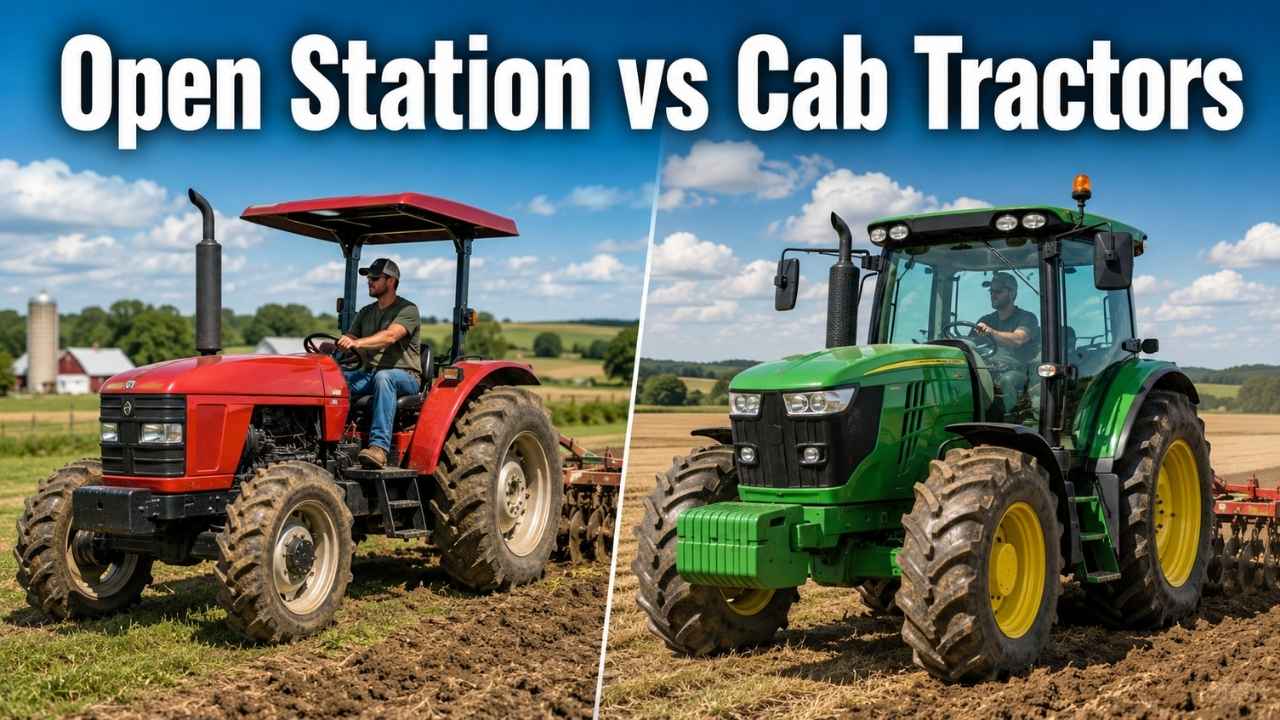
Farmers can debate tractor brands, horsepower, transmissions, tires, and implements for hours. But one topic always brings out strong opinions: open station vs cab tractors.
Some farmers swear by open station tractors. They like the simplicity, lower cost, easy access, and the fact that there is less glass, wiring, air conditioning, and electronics to break. Others argue that once you spend long days in dust, heat, cold, wind, pollen, bugs, or chemical spray, a cab is no longer a luxury. It becomes part of staying comfortable, productive, and sometimes even healthier.
So, which one is better? The honest answer is simple: it depends on the job, the climate, the farm size, and how many hours the operator spends in the seat.
Why Open Station Tractors Still Have Loyal Fans
Open station tractors have a practical charm that never really goes away. They are simple machines, and that simplicity matters on a farm. When you are moving wagons, feeding animals, raking hay, running an auger, doing light loader work, or making quick trips around the yard, climbing on and off an open station tractor feels easy and natural.
Many farmers also like how connected they feel to the machine. You can hear more, see more, and react quickly. There is no door to swing open, no cab step to climb through, no glass to worry about near tree limbs or tight barns. For chores that require frequent stops, an open station tractor can be faster and less annoying to use.
The biggest argument is usually maintenance. A cab adds comfort, but it also adds parts. Glass can crack. Door latches can fail. Seals can leak. Fans, heaters, switches, wiring, and air conditioning systems can all become future repair bills. That is why you often hear farmers say, “AC and glass are just extra things to break.”
And honestly, they are not completely wrong.
For older tractors especially, open station models are often cheaper to buy and easier to keep alive. If the tractor only works short jobs, mild weather, or seasonal chores, the extra cost of a cab may not feel necessary.
Visibility Is a Big Reason Farmers Like Open Station Models
One thing open station tractors do very well is visibility. Without cab posts, doors, mirrors, and glass around you, the tractor can feel more open and easier to judge in tight spaces.
That matters when backing up to implements, working near fences, moving around livestock, mowing along edges, raking hay, tedding, or passing through gates. Some operators also like being able to stand slightly and look back at the implement, especially during hay work.
For small acreage, yard work, barnyard chores, and jobs where you constantly get on and off the machine, an open station tractor still makes plenty of sense.
But Comfort Changes the Whole Debate
Here is where cab tractors start to win people over.
A lot of farmers who once preferred open station tractors say the same thing after buying a cab model: once you get used to it, it is hard to go back.
A cab protects the operator from heat, cold, dust, pollen, wind, bugs, noise, and flying debris. That may sound like comfort, but after eight, ten, or twelve hours in the seat, comfort becomes productivity. A tired, dusty, overheated operator is not going to work as efficiently as someone sitting in a quieter, cleaner, climate-controlled cab.
In hot areas, air conditioning can make summer mowing, baling, planting, and loader work much more bearable. In colder regions, heat can make winter feeding, snow removal, manure spreading, and late-season work far less miserable.
That is why many farmers do not see a cab as a luxury anymore. They see it as protection for the person doing the work.
Dust Can Make a Cab Worth It
Dust is one of the biggest reasons farmers switch to cab tractors. Anyone who has mowed dry pasture, baled hay, worked ground in dusty conditions, or spent hours in pollen-heavy fields knows how rough it can be.
Dust gets in your eyes, nose, lungs, clothes, and hair. It can make allergies worse and leave the operator exhausted by the end of the day. For some jobs, especially hay and field work, a cab with proper filtration can make a major difference.
This is also why cab tractors are often preferred for spraying. A cab does not replace safe handling practices, but it can help reduce exposure when properly maintained and filtered. For farms using GPS monitors, control boxes, and other precision equipment, the cab also protects expensive electronics from dust, moisture, and vibration.
Cab Tractors Are Best for Long-Hour Work
The longer the job, the more a cab makes sense.
For quick chores, an open station tractor may be fine. But for hay baling, planting, spraying, mowing large acreage, road travel, snow work, or all-day field jobs, a cab can completely change the experience.
Modern cab tractors usually offer heat, air conditioning, better sound control, cleaner air, better lighting, radio or Bluetooth, and more protected controls. These features may not matter much during a 20-minute chore. But after a full day, they matter a lot.
Less fatigue can also mean fewer mistakes. That is something many people overlook. Operator comfort is not just about feeling good. It can affect safety, accuracy, and how much work gets done.
Cab Tractors Have Downsides Too
Cab tractors are not perfect. They usually cost more upfront, and they can cost more to repair.
The air conditioning system is one of the biggest concerns. When it works, it is wonderful. When it fails in the middle of summer, a cab tractor can become brutally uncomfortable. A sealed cab with no working AC may feel worse than an open station tractor.
Cab height can also be a problem in some barns, sheds, orchards, wooded areas, or low-clearance spaces. Visibility may be better in some directions and worse in others, depending on the cab design. And of course, broken glass or damaged doors are never cheap problems.
That means cab maintenance matters. Filters, seals, fans, refrigerant, switches, and vents all need attention if you want the cab to stay useful.
So, Which One Should You Choose?
If you want a simple, affordable tractor for short jobs, light chores, loader work, garden work, or small acreage, an open station tractor can be a smart choice. It is easy to use, easy to access, and usually easier to maintain.
If you spend long hours in the field, work in extreme heat or cold, deal with dust and pollen, spray chemicals, mow large areas, bale hay, or use expensive electronics, a cab tractor usually makes more sense.
For many farms, the best answer is not one or the other. It is both.
An open station tractor is great for quick chores, tight areas, and lower-hour work. A cab tractor is better for long days, harsh weather, dust, spraying, and serious field time.
At the end of the day, open station tractors may be simpler. But cab tractors protect the most important part of the machine: the operator.