
Contents
- 1 When 95 Horsepower Was a Big Deal?
- 2 Bigger Tractors Came From Bigger Farms
- 3 More Horsepower, Fewer People
- 4 Crop Changes Also Changed Tractor Needs
- 5 The 1980s Farm Crisis Still Shapes Tractor Thinking
- 6 Old Tractors Still Have Real Value
- 7 Technology Changed the Meaning of Tractor Size
- 8 Is Bigger Farming Better?
- 9 Why Farmers Feel Nostalgic About Older Tractors
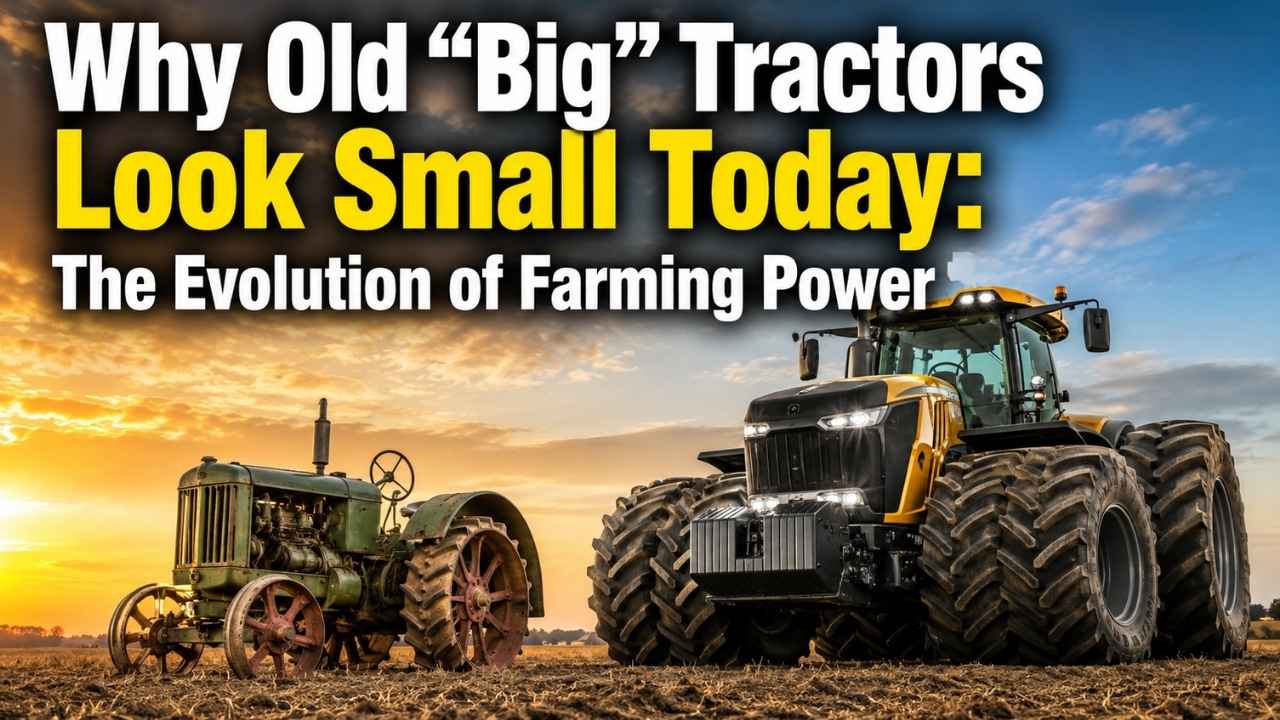
There was a time when a 75, 85, or 95 horsepower tractor could make an entire neighborhood stop and stare. A farmer pulling into the field with a machine like that looked like he had just brought home the future. In some rural areas, a tractor such as a John Deere 6400, a Case 85 hp tractor, or an older utility model was considered serious muscle.
Today, that same tractor may be used for light chores, feeding cattle, moving wagons, running an auger, or “putting around” the farm. What once looked massive can now seem modest next to 500 horsepower tractors, 90-foot planters, huge combines, GPS-guided equipment, and high-capacity tillage tools.
That shift says a lot about how farming has changed. It is not just about bigger tractors. It is about bigger farms, fewer workers, different crops, changing economics, and the constant pressure to get more work done in less time.
When 95 Horsepower Was a Big Deal?
For many older farmers, the idea that a 95 hp tractor could now be considered small still feels strange. In the comments, several people remembered when a 75 hp or 85 hp machine was viewed as more tractor than anyone would ever need. One farmer mentioned growing up in an area where 50 hp tractors, Ford 8Ns, and Ford 2000s were still common. Another remembered neighbors stepping up from John Deere 3020s to 4020s, 4320s, 4440s, and 4640s.
That kind of memory matters because it shows how quickly the definition of “big tractor” has changed.
In the past, many farms were smaller, more diversified, and more labor-intensive. Tobacco, vegetables, hay, cattle, and small grain operations often relied on tractors that would seem underpowered by modern row-crop standards. A 4-row planter, 2-row tobacco setter, or small hay setup was enough for many farms.
Now, in many regions, agriculture has moved toward larger acreage, wider equipment, and fewer people doing the work. A tractor that once handled the biggest jobs in the county may now sit beside machines with three, four, or five times the horsepower.
Bigger Tractors Came From Bigger Farms
The rise of high horsepower tractors did not happen by accident. Farmers did not simply buy bigger machines because they looked impressive. They bought them because the job changed.
As farms expanded, equipment had to cover more acres faster. A 4-row planter gave way to 12-row, 16-row, 24-row, and even larger machines. Small tillage tools turned into massive field cultivators, rippers, disks, and air seeders. Hay and forage operations also scaled up, with larger balers, mergers, mowers, and self-propelled equipment becoming more common.
The logic is simple: when a farmer has more acres and a short weather window, speed matters. If rain is coming, planting, spraying, cutting, or harvesting cannot wait forever. Bigger tractors pull bigger equipment, and bigger equipment helps finish the job before conditions change.
That is why farm equipment evolution is closely tied to farm size. As acres increased, so did horsepower.
More Horsepower, Fewer People
One of the strongest points from the discussion was this: more horsepower often means fewer people.
Years ago, many jobs required crews. Tobacco setting, hand labor, vegetable work, small hay operations, and older harvesting systems depended heavily on people. Some farms needed several workers just to keep one operation moving.
Modern equipment changed that. A large tractor with GPS, a wide planter, and high-capacity attachments can do work that once required several machines and more hands. A large combine can harvest huge acreage with one operator. A livestock or grain farm that once needed a bigger crew may now be run by one farmer and a couple of helpers.
That is good for efficiency, but it also changes rural life. Fewer workers means fewer families directly tied to farm labor. Fewer small farms means fewer neighbors running similar-sized equipment. The landscape becomes more industrial, more capital-heavy, and sometimes less personal.
This is why some farmers look at modern farming equipment with mixed feelings. The machines are impressive, but the change behind them is not always positive.
Crop Changes Also Changed Tractor Needs
In some areas, crops shifted from tobacco and vegetables to corn, cattle, hay, and row-crop systems. That matters because different crops require different equipment.
Tobacco and vegetable farms often involved smaller fields, more hands-on work, transplanting equipment, wagons, setters, cultivators, and harvesting crews. Corn and large-scale row-crop production often reward wider equipment, more horsepower, faster planting, bigger sprayers, and larger harvesting systems.
A region that once considered a mid-size tractor powerful may now be surrounded by large row crop tractors because the farming system itself changed.
When the crop mix changes, the machine lineup follows.
The 1980s Farm Crisis Still Shapes Tractor Thinking
The comments also touched on something important: not every farmer who bought bigger equipment survived financially. Some operators stepped up to larger tractors and bigger payments, only to lose equipment or land during hard times.
That is a reminder that bigger is not always smarter.
A large tractor can help a farm cover more ground, but it also brings higher costs. Purchase price, interest, fuel, tires, repairs, insurance, and depreciation all add up. If commodity prices fall, interest rates rise, or yields disappoint, that big iron can become a heavy burden.
Older farmers often remember who bought the biggest tractor in the neighborhood and who still had equipment after the hard years. Sometimes the farmer with the smaller, paid-off tractor stayed in business longer than the farmer chasing the newest machine.
That lesson still applies today. A tractor should match the farm’s real workload, not just the farmer’s pride.
Old Tractors Still Have Real Value
Even though old “big” tractors may look small compared to modern machines, they are far from useless. In fact, many older tractors remain valuable because they are simple, durable, affordable, and easy to repair.
A John Deere 6400, John Deere 4020, Allis Chalmers 185, Case 85 hp tractor, or similar older machine can still be perfect for many farm jobs. These tractors may not pull a massive planter or high-speed disk, but they can handle loader work, hay raking, feeding livestock, mowing, hauling wagons, running augers, and general utility chores.
For small farms, hobby farms, cattle farms, hay operations, and backup use, an older tractor can be a smart investment. It may not impress anyone at the coffee shop anymore, but it can still earn its keep every week.
That is the funny thing about used tractors. Their status may change, but their usefulness often remains.
Technology Changed the Meaning of Tractor Size
Horsepower is only part of the story. Modern tractors are not just bigger; they are smarter, heavier, more comfortable, and more connected.
A newer tractor may include GPS guidance, autosteer, advanced hydraulics, electronic controls, emissions systems, cab suspension, precision monitors, telematics, and integrated implement controls. That makes modern machines more productive, but also more complex.
Older tractors were often judged mainly by horsepower, weight, traction, and reliability. Today, a tractor’s value may also depend on software, sensors, hydraulic flow, PTO options, transmission type, cab comfort, and compatibility with precision tools.
That is why a simple 95 horsepower tractor from the 1990s can feel very different from a modern 95 hp tractor. The number may look similar, but the technology around it has changed.
Is Bigger Farming Better?
This is where opinions split.
Some people see industrial farming as efficient, necessary, and unavoidable. Large farms produce huge amounts of food, fuel crops, feed, and fiber. Bigger equipment helps farmers manage more acres with fewer people, especially when labor is hard to find.
Others argue that farming has lost something along the way. They worry about soil health, rural communities, debt, consolidation, and the disappearance of smaller diversified farms. In that view, the rise of massive tractors and giant planters is not just progress. It is also a sign of a system that pushes farmers to grow bigger or get out.
The truth is probably somewhere in the middle. Modern equipment has helped agriculture become incredibly productive. But bigger machines also come with bigger risks, bigger costs, and bigger pressure.
Why Farmers Feel Nostalgic About Older Tractors
Old tractors carry memories. They remind people of fathers, grandfathers, neighbors, tobacco fields, hay seasons, long summers, small farms, and a time when equipment felt more mechanical than digital.
That is why a picture of an older tractor can start a serious conversation. It is not just a machine. It is a marker of how much farming has changed.
When someone says, “This used to be the biggest tractor around,” they are really saying, “The world I knew has changed.”
And that is true. The fields are bigger. The machines are wider. The farms are fewer. The technology is more advanced. The economics are tougher. The operator may be sitting in a cab with autosteer instead of bouncing across the field on an open-station tractor.
But the core job is still familiar: get the crop planted, get the hay made, feed the animals, fix what breaks, and hope the weather cooperates.
The story of old “big” tractors becoming small is really the story of modern agriculture. A tractor that once made a farmer look ahead of his time may now be used for chores, backup work, or nostalgia. That does not make it worthless. It just shows how far equipment and farming practices have moved.
Farm tractors have grown because farms have grown. High horsepower tractors became common because wider equipment, fewer workers, and tighter weather windows demanded more power. But older machines still matter because they are practical, reliable, and deeply connected to farming history.
In the end, the best tractor is not always the biggest one. It is the one that fits the farm, pays for itself, and shows up when the work needs to get done.