
Contents
- 1 What Is the Magnum 2+2?
- 2 The History Behind the 2+2 Design
- 3 Super 70 Series: The Closest Thing to a Magnum 2+2
- 4 How the Case IH Magnum Changed the Direction
- 5 Why Was the Magnum 2+2 Never Mass Produced?
- 6 Possible Advantages of a Magnum 2+2
- 7 Possible Disadvantages of a Magnum 2+2
- 8 Why Farmers and Collectors Still Love the Idea
- 9 Can You Buy a Magnum 2+2 Today?
- 10 Magnum 2+2 Quick Overview
- 11 The Magnum 2+2 Is a “What Could Have Been” Legend
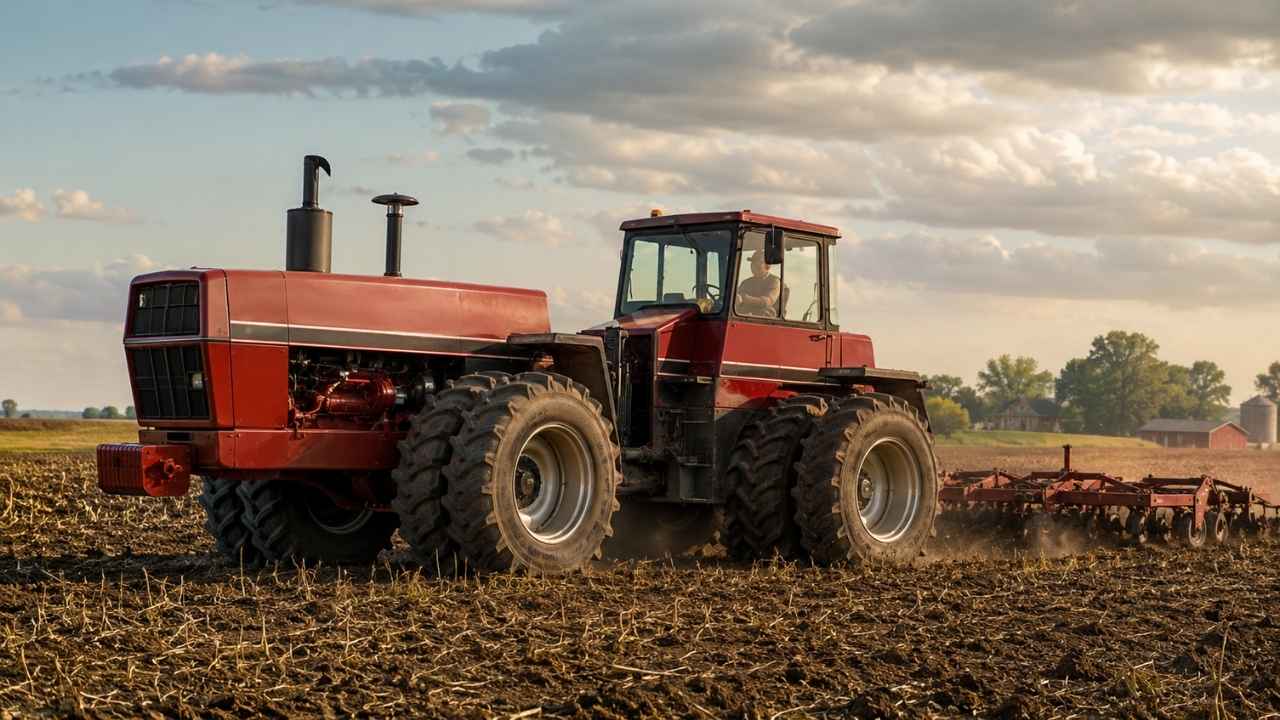
Magnum 2+2 is one of those tractor ideas that still gets farmers, collectors, and machinery fans talking. It was never a widely sold production model, but the concept behind it is fascinating: what if the bold International Harvester 2+2 articulated design had continued into the Case IH Magnum era?
With its connection to IH’s unusual “anteater” tractors and the powerful reputation of the Magnum lineup, the Magnum 2+2 feels like a machine that almost belonged to the future. It represents power, traction, better weight balance, and one of the biggest “what if?” stories in tractor history.
Some tractors become famous because they were produced in huge numbers and worked hard on farms for decades. Others become legendary because they almost happened — or because they represent an idea that was ahead of its time. The Magnum 2+2 belongs to that second group.
When people talk about the Magnum 2+2, they are usually referring to a fascinating concept: combining the power and reputation of the Case IH Magnum series with the unusual articulated design of the old International Harvester 2+2 tractors.
However, there is one important point to make clear from the start: Magnum 2+2 was not a widely sold production tractor model. It is better understood as a concept, prototype idea, or “what could have been” machine that connects the International Harvester 2+2 legacy with the later Case IH Magnum era.
What Is the Magnum 2+2?
The Magnum 2+2 can be described as a tractor concept that blends two important names in agricultural machinery history: Case IH Magnum and International Harvester 2+2.
The original 2+2 tractors were designed with a long front section, an articulated frame, four-wheel drive, and a row-crop-friendly layout. They looked different from traditional tractors, but the design had a practical purpose. International Harvester wanted to give farmers more traction, better weight distribution, and improved field performance without moving fully into the large-frame articulated tractor category.
The Magnum name, on the other hand, became known for power, reliability, operator comfort, and strong field performance. So the idea of a Magnum 2+2 naturally sparks interest: what if Case IH had continued the 2+2 concept with Magnum power and technology?
That question is exactly why this tractor idea still gets attention today.
The History Behind the 2+2 Design
To understand the Magnum 2+2, you first need to understand the original International Harvester 2+2 tractors.
International Harvester introduced the 2+2 design in the late 1970s. These tractors had a very distinctive appearance, with the engine positioned far forward and the cab placed behind the articulation point. Because of their long nose, many farmers and collectors nicknamed them “anteaters.”
At first glance, the design looked unusual. But the engineering behind it made sense. The forward engine placement helped put more weight over the front wheels. The articulated design improved turning and traction. The tractor could work in row-crop conditions while still offering more pulling power than many conventional two-wheel-drive tractors of the time.
Models such as the 3388, 3588, 3788, 6388, 6588, and 6788 helped build the 2+2 identity. These tractors were not perfect, but they were bold. They tried to solve real farming problems with a completely different layout.
Super 70 Series: The Closest Thing to a Magnum 2+2
The most advanced version of the International Harvester 2+2 idea came with the Super 70 Series, especially the IH 7288 and IH 7488.
These tractors are often brought up when people discuss the Magnum 2+2, because they were the final and most developed factory-built examples of the 2+2 concept. They had more power, improved features, and a stronger presence than earlier 2+2 models.
The IH 7288 and IH 7488 were produced in very limited numbers, which makes them extremely interesting to collectors today. They represented the peak of International Harvester’s 2+2 development. Unfortunately, the timing was difficult. International Harvester’s agricultural division was soon merged into what became Case IH, and the 2+2 line did not continue as a major production path.
That is where the “Magnum 2+2” idea becomes so interesting. Many enthusiasts wonder what might have happened if the Super 70 2+2 concept had evolved into the Case IH Magnum era.
How the Case IH Magnum Changed the Direction
The Case IH Magnum series became one of the most important tractor lines in modern farming. It arrived after the merger of Case and International Harvester agricultural operations and gave the new Case IH brand a strong identity.
Instead of continuing the 2+2 design, Case IH focused on a more conventional high-horsepower row-crop tractor layout for the Magnum series. This proved to be a successful decision. The Magnum tractors quickly earned a reputation for durability, power, comfort, and strong resale value.
At the same time, Case IH also had the Steiger line for larger articulated tractors. This meant the company already had two strong tractor categories: Magnum for row-crop power and Steiger for big articulated horsepower.
Because of that, a production Magnum 2+2 may have been difficult to justify from a business perspective. The idea was exciting, but the market direction was moving elsewhere.
Why Was the Magnum 2+2 Never Mass Produced?
There are several likely reasons why the Magnum 2+2 never became a mainstream production tractor.
First, the 2+2 design was unusual. Some farmers loved the concept, but others were unsure about it. The long nose, articulation point, and different driving feel made it stand out — sometimes in a good way, sometimes in a controversial way.
Second, manufacturing a 2+2-style Magnum would likely have been more expensive than building a standard Magnum tractor. A special frame, articulated steering system, unique drivetrain layout, and different service requirements would have added complexity.
Third, Case IH already had a clear product strategy. The Magnum line handled powerful row-crop work, while Steiger tractors covered the large articulated tractor market. A Magnum 2+2 would have sat somewhere between those two categories, which may have made it harder to position.
Finally, the 2+2 idea may have been ahead of its time. Farmers today talk a lot about traction, soil compaction, flotation, balance, and efficiency. Those were exactly the issues the 2+2 design tried to address years ago.
Possible Advantages of a Magnum 2+2
If a Magnum 2+2 tractor had entered full production, it could have offered several impressive advantages.
One major benefit would have been traction. With engine weight placed forward and power going to all four wheels, the tractor could have delivered strong pulling ability in tough field conditions.
Another advantage would have been weight distribution. Good weight balance matters when pulling heavy tillage tools, planters, grain carts, or other large equipment. A Magnum 2+2 could have offered a unique balance between a row-crop tractor and a larger articulated tractor.
The design might also have helped with soil compaction management. By spreading weight differently across the tractor, a 2+2-style machine could potentially reduce pressure in certain field conditions.
Maneuverability would have been another selling point. A Magnum 2+2 could have offered articulated steering while still being useful in row-crop operations, making it an interesting option for farmers who wanted power without moving into a full-size four-wheel-drive tractor.
Possible Disadvantages of a Magnum 2+2
Of course, the Magnum 2+2 idea would not have been perfect.
The first challenge would have been cost. A complex articulated row-crop tractor would likely have been more expensive to build and maintain.
The second issue would have been serviceability. Farmers value machines that are easy to maintain, especially during busy seasons. A unique tractor design can create unique repair challenges.
The third problem would have been market acceptance. The original 2+2 tractors had loyal fans, but they also had critics. Some farmers simply preferred the familiar layout of a traditional tractor.
Another possible concern would have been resale value. Since the tractor would have belonged to a niche category, some buyers might have worried about long-term parts availability and market demand.
Why Farmers and Collectors Still Love the Idea
The Magnum 2+2 remains interesting because it represents a bold farming idea. It was not just about horsepower. It was about solving real field problems in a different way.
Farmers want more traction. They want less wasted fuel. They want better flotation. They want less soil compaction. They want a tractor that can pull hard but still work efficiently in row-crop conditions.
That is why the 2+2 concept still feels relevant. Even though the Magnum 2+2 never became a major production tractor, the thinking behind it has not disappeared. Modern tractor design still focuses heavily on balance, traction, tires, tracks, flotation, and soil protection.
In a way, the Magnum 2+2 was the kind of idea that makes people ask, “What if?”
Can You Buy a Magnum 2+2 Today?
A true production Case IH Magnum 2+2 is not something you will normally find on the used tractor market, because it was not a regular factory model.
However, collectors can still look for International Harvester 2+2 tractors such as the 3388, 3588, 3788, 6388, 6588, 6788, 7288, and 7488. The Super 70 models, especially the 7288 and 7488, are particularly rare and valuable among collectors.
For farmers looking for actual working machines, a used Case IH Magnum may be a more realistic choice. The Magnum series has a strong reputation and a much larger used market. But for collectors and tractor history fans, the 2+2 machines remain special.
Magnum 2+2 Quick Overview
| Topic | Details |
|---|---|
| Official production model? | No widely sold production Magnum 2+2 model |
| Related tractor family | International Harvester 2+2 |
| Closest factory examples | IH 7288 and IH 7488 Super 70 Series |
| Design idea | Articulated row-crop tractor with strong traction |
| Main appeal | Power, balance, flotation, and field efficiency |
| Main challenge | Cost, complexity, and market acceptance |
| Collector interest | High, especially for rare Super 70 2+2 tractors |
The Magnum 2+2 Is a “What Could Have Been” Legend
The Magnum 2+2 is one of those tractor ideas that continues to capture attention because it sits at the crossroads of history, engineering, and imagination.
It connects the bold International Harvester 2+2 design with the power and reputation of the Case IH Magnum name. Although it never became a mainstream production tractor, the concept still feels important because it focused on problems that farmers still care about today: traction, balance, soil compaction, and efficiency.
In the end, the Magnum 2+2 is more than just a rare tractor discussion. It is a reminder that some of the most interesting ideas in farming history are not always the ones that sell the most units. Sometimes, the most memorable machines are the ones that make farmers wonder what might have happened if the company had taken one more step.