Contents
- 1 Why Tractor Attachments Create So Much Shop Clutter
- 2 Why Pallet Racking Works So Well?
- 3 Cheapest Way to Organize Tractor Attachments
- 4 Pallet Racking Cost Breakdown: What to Consider
- 5 How to Set Up Pallet Racking in a Tractor Shop
- 6 Safety Comes First
- 7 Best Tractor Attachments to Store on Pallet Racks
- 8 Why Organization Saves Money
- 9 Practical Shop Layout Example
If your tractor attachments are scattered across the floor, leaning against walls, or buried behind other equipment, you already know the problem. A loader bucket, pallet forks, ballast box, box blade, tiller, snow pusher, mower deck, grapple, and small implements can take over a shop fast. Before long, the floor space disappears, moving one attachment means moving three others, and a simple project turns into a frustrating game of “where did I put that?”
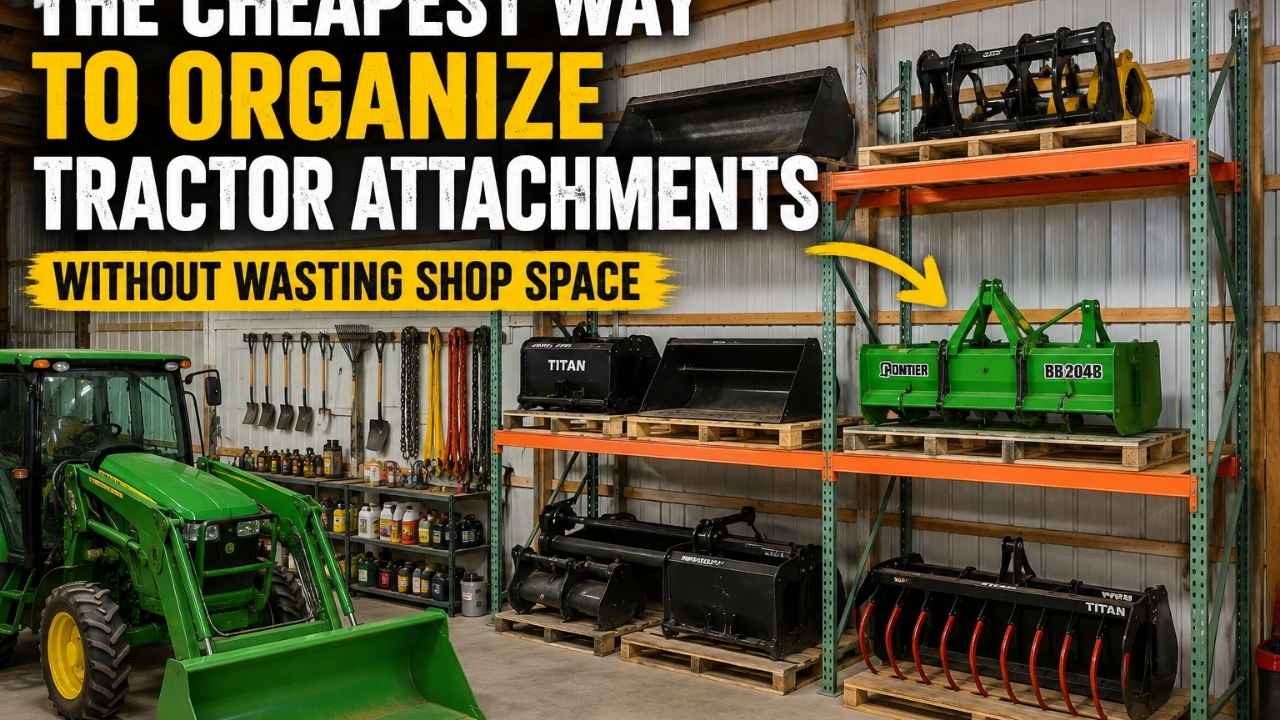
That is why pallet racking for tractor attachments has become such a practical solution for many tractor owners, hobby farmers, acreage owners, and small shop users. Instead of spreading heavy attachments across the floor, pallet racks let you use vertical space. The idea is simple: store attachments, parts, tools, fluids, bins, and seasonal equipment on strong rack levels so the shop stays open, clean, and easier to work in.
A pallet is basically a flat platform used to support, store, and move materials with equipment such as a forklift, pallet jack, or loader forks. (Merriam-Webster) In a tractor shop, that same concept works extremely well because many attachments can either sit directly on pallets or be staged in a way that makes them easier to lift, move, and organize.
Why Tractor Attachments Create So Much Shop Clutter
Tractor attachments are awkward. They are heavy, wide, uneven, and rarely shaped in a way that stacks neatly. A rotary cutter takes up a huge footprint. Pallet forks are easy to lose behind larger implements. Buckets collect dirt and random tools. Rear attachments sit low to the ground and become trip hazards. If you own a compact tractor or utility tractor, the problem grows every year because attachments multiply.
One year you buy a box blade. Then you add forks. Then comes a grapple, snow blade, ballast box, landscape rake, tiller, sprayer, chains, spare parts, hydraulic hoses, and maybe a second bucket. Suddenly, the shop that once felt spacious starts feeling too small.
That is where tractor attachment storage ideas matter. The goal is not just to make the shop look better. A better storage system saves time, protects equipment, reduces damage, improves safety, and makes every job easier to start.
Why Pallet Racking Works So Well?
The biggest advantage of pallet racking for tractor attachments is vertical storage. Most garages, pole barns, and farm shops have unused height. The floor may be crowded, but the wall space and upper air space are often empty. Pallet racks turn that unused height into storage.
Instead of putting every attachment on the ground, you can place lighter or seasonal items on upper rack levels and keep frequently used attachments lower. For example, pallet forks, chains, hydraulic accessories, spare parts, mower deck items, fluids, seeders, and smaller implements can be grouped by use.
This approach helps you create zones:
| Storage Zone | Best Items to Store |
|---|---|
| Lower rack level | Heavy attachments, buckets, forks, ballast box |
| Middle rack level | Parts bins, chains, hydraulic hoses, toolboxes |
| Upper rack level | Seasonal items, rarely used attachments, spare parts |
| Floor area | Oversized implements that cannot be safely raised |
Good pallet racking is especially useful when you have a tractor with loader forks. If your tractor can safely lift and place pallets, the rack becomes part of your workflow. You can move attachments and supplies without dragging them across the floor.
Cheapest Way to Organize Tractor Attachments
The cheapest way to organize tractor attachments is not always buying brand-new storage systems. Used pallet racking can often be a smart choice if it is in good condition, properly rated, and installed safely. Many businesses sell used warehouse racks when they move, remodel, downsize, or upgrade. For a farm shop, that can mean strong industrial storage at a lower cost than custom-built shelving.
However, cheap should not mean unsafe. Pallet racks must be rated for the weight you plan to store. Tractor attachments can be much heavier than they look. A bucket, ballast box, rotary tiller, grapple, or heavy rear implement can overload weak shelving quickly.
Before buying racks, check:
- Beam weight rating
- Upright condition
- Welds and frame damage
- Rust or bent steel
- Locking pins or safety clips
- Rack depth and height
- Floor anchoring requirements
- Space for tractor or forklift access
- Ceiling clearance
- Attachment weight
If a rack is bent, cracked, twisted, or missing critical safety parts, skip it. Saving money on damaged racking is not worth the risk.
Pallet Racking Cost Breakdown: What to Consider
A real pallet racking cost breakdown should include more than just the rack price. Many people only look at the cost of the uprights and beams, but the total cost can include hardware, transport, installation, decking, anchors, and possible equipment rental.
Here is a practical breakdown:
| Cost Item | Why It Matters |
|---|---|
| Uprights | Main vertical frames that support the rack |
| Beams | Horizontal supports that carry each storage level |
| Wire decking or wood decking | Creates a safer shelf surface |
| Safety pins/clips | Keeps beams locked in place |
| Concrete anchors | Helps secure racks to the floor |
| Delivery or trailer rental | Used racks can be large and difficult to move |
| Installation tools | Impact driver, level, concrete bit, anchors |
| Labor/time | Setup can take longer than expected |
| Extra pallets | Helps organize parts and accessories |
| Labels/bins | Keeps small items easy to find |
The smartest way to compare costs is by calculating cost per usable storage bay, not just total price. A larger rack system may cost more upfront but provide much more usable space. If it clears half your shop floor, the value can be huge.
How to Set Up Pallet Racking in a Tractor Shop
A good rack setup starts with planning. Do not install racks wherever they happen to fit. Think about how your tractor moves through the shop, how much turning room you need, and which attachments you use most often.
Start by measuring:
- Shop wall length
- Ceiling height
- Tractor height with ROPS or cab
- Loader height
- Fork reach
- Door clearance
- Attachment width
- Attachment weight
- Aisle space
Then plan your rack layout around actual use. Keep heavy and frequent-use items low. Store lighter seasonal items higher. Avoid placing awkward attachments where they are difficult to reach. Leave enough space in front of the rack for safe loading and unloading.
For most tractor owners, the best setup is simple: one strong rack wall for attachments and one smaller section for parts, fluids, chains, straps, and tools.
Safety Comes First
Pallet racking can make a shop much more organized, but only if it is used correctly. Heavy tractor attachments stored overhead can become dangerous if the rack is overloaded, unlevel, or poorly anchored.
Follow these basic safety rules:
- Never exceed rack weight ratings.
- Put the heaviest items on the lowest level.
- Anchor racks when recommended.
- Use proper decking.
- Avoid damaged uprights or beams.
- Keep people away while loading.
- Do not lift attachments higher than necessary.
- Make sure pallets are solid and not rotten.
- Keep loads balanced.
- Label rack sections if multiple people use the shop.
If you are unsure about the weight of an attachment, look it up before storing it on a rack. Guessing is risky.
Best Tractor Attachments to Store on Pallet Racks
Not every implement belongs on a rack, but many items work well with the right setup.
Good candidates include:
| Attachment or Item | Storage Suitability |
|---|---|
| Pallet forks | Excellent |
| Loader bucket | Good if rack is rated and accessible |
| Grapple | Good but heavy; store low |
| Ballast box | Good but usually lower level only |
| Chains and binders | Excellent in bins or on hooks |
| Hydraulic hoses | Excellent in labeled bins |
| Sprayer parts | Good |
| Snow equipment parts | Good seasonal storage |
| Mower deck parts | Good |
| Spare tires or wheels | Good if weight is considered |
| Fluids and filters | Good on dedicated shelf |
Large rotary cutters, heavy tillers, and oversized implements may be better stored on the floor unless you have commercial-grade racking, enough lift capacity, and proper handling equipment.
Why Organization Saves Money
A clean tractor shop is not just about looks. Better organization can save real money.
When attachments are stored properly, they are less likely to sit in mud, collect water, get hit by other equipment, or suffer bent stands and damaged hydraulic couplers. You also reduce the chance of buying duplicate parts because you could not find the ones you already owned.
A well-organized rack system can also save time during seasonal changes. Snow equipment, mowing attachments, planting tools, sprayer parts, and maintenance supplies can all have dedicated areas. Instead of searching for 30 minutes, you can hook up and get to work.
Practical Shop Layout Example
A simple tractor shop storage layout might look like this:
| Area | Purpose |
|---|---|
| Left wall pallet rack | Attachments and palletized equipment |
| Right wall shelving | Filters, oil, tools, small parts |
| Rear corner | Seasonal items and rarely used equipment |
| Center floor | Open work area |
| Near door | Frequently used attachments |
| Workbench zone | Repairs, sharpening, maintenance |
The key is keeping the center open. A shop feels much bigger when the floor is clear. Pallet racking helps because it moves clutter off the ground and into controlled storage zones.
For tractor owners who are tired of stepping around attachments, pallet racking can be one of the most practical shop upgrades. It uses vertical space, protects equipment, improves workflow, and makes a small or medium-size shop feel much larger.
The best setup does not have to be fancy. A strong used pallet rack, smart layout, safe weight planning, and a few labeled storage zones can completely change how your tractor shop works. Just remember: with heavy farm equipment, safety matters more than saving a few dollars.
If you choose the right rack, install it properly, and store attachments by weight and frequency of use, pallet racking may be the simplest and most cost-effective way to organize tractor attachments.