
Contents
- 1 Why Hydraulic Hose Replacement Matters
- 2 Common Signs a Hydraulic Hose Should Be Replaced
- 3 How Long Do Hydraulic Hoses Last?
- 4 Should You Replace Hydraulic Hoses Before They Fail?
- 5 Hydraulic Hose Inspection Checklist
- 6 Can You Repair a Hydraulic Hose Instead of Replacing It?
- 7 What Happens If You Ignore a Bad Hydraulic Hose?
When should hydraulic hoses be replaced? Learn the warning signs of hose failure, average hydraulic hose lifespan, inspection tips, and when to replace hoses before leaks become dangerous.
Hydraulic hoses should be replaced when they show visible damage, start leaking, become stiff or cracked, have damaged fittings, or reach the end of their recommended service life. Waiting until a hydraulic hose bursts can be expensive, messy, and dangerous. A failed hose can stop a tractor, skid steer, excavator, loader, backhoe, forklift, or other hydraulic machine instantly.
Hydraulic systems work under high pressure. That means even a small weakness in a hose can turn into a serious problem. A pinhole leak may look minor, but pressurized hydraulic fluid can penetrate skin and cause severe injury. For that reason, knowing when hydraulic hoses should be replaced is not just a maintenance issue. It is a safety issue.
Why Hydraulic Hose Replacement Matters
A hydraulic hose carries pressurized fluid between pumps, valves, cylinders, motors, and other hydraulic components. If the hose is in good condition, the system can lift, steer, dig, tilt, push, pull, and operate attachments properly.
But once a hose becomes worn, cracked, kinked, or damaged, the system becomes unreliable. You may notice slow hydraulic movement, weak lifting power, fluid leaks, or sudden loss of pressure.
Replacing a hydraulic hose at the right time can help prevent:
- Equipment downtime
- Hydraulic fluid leaks
- Expensive repairs
- Fire risk in hot work areas
- Contamination inside the hydraulic system
- Sudden hose bursts
- Operator injury
A hose may look like a simple part, but it plays a major role in machine performance and safety.
Common Signs a Hydraulic Hose Should Be Replaced
You should replace a hydraulic hose if you notice any of the following warning signs.
1. Visible Cracks on the Outer Cover
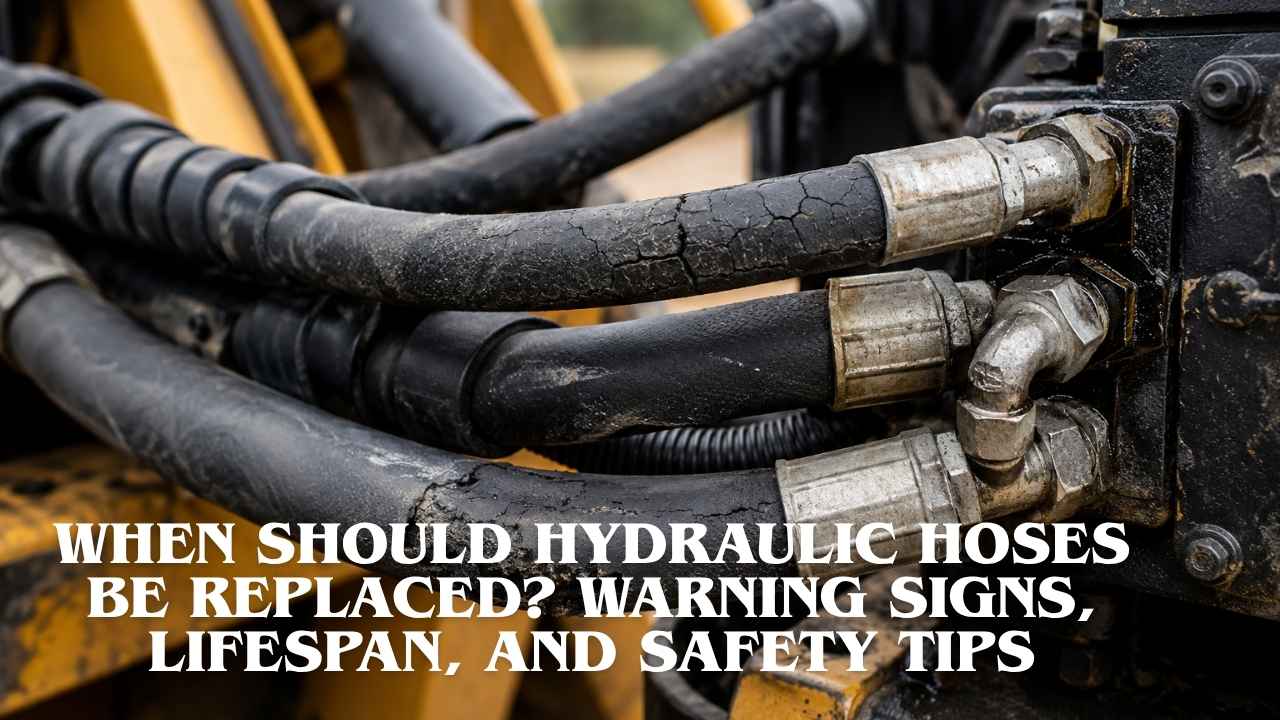
Cracking is one of the clearest signs that a hydraulic hose is aging. The outer cover protects the reinforcement layers inside the hose. Once that cover starts cracking, the hose becomes more vulnerable to moisture, dirt, abrasion, and pressure damage.
Small surface cracks may not always mean immediate failure, but they should never be ignored. If the cracks are deep, widespread, or located near fittings, replacement is usually the safest choice.
2. Hydraulic Fluid Leaks
A leaking hose should be inspected immediately. Leaks can appear near the fittings, along the hose body, or through small pinholes.
Never check for hydraulic leaks with your bare hand. High-pressure fluid can inject into the skin. Instead, shut the machine down, relieve system pressure, and use cardboard or paper to help locate leaks safely.
If a hose is leaking, it usually needs to be replaced rather than patched. Temporary fixes may not hold under pressure.
3. Bulges or Blisters on the Hose
A bulge or blister means the internal structure of the hose may be failing. This can happen when the reinforcement layer is damaged or when fluid gets between hose layers.
A bulging hydraulic hose is a serious warning sign. It may burst without much notice, especially under load. If you see swelling, bubbling, or blistering, stop using the machine and replace the hose.
4. Abrasion or Worn Outer Cover
Hydraulic hoses often rub against metal brackets, frames, other hoses, or moving parts. Over time, this friction can wear away the outer cover.
If the outer rubber is worn down but the reinforcement is not exposed, you may be able to protect the hose with a sleeve or clamp adjustment. However, if the steel braid or reinforcement layer is visible, the hose should be replaced.
Abrasive wear is especially common on skid steers, excavators, loaders, tractors, and machines with moving booms or attachments.
5. Kinks, Twists, or Flattened Areas
A hydraulic hose should not be kinked, sharply bent, twisted, crushed, or flattened. These conditions restrict fluid flow and weaken the hose structure.
A kinked hose may cause slow hydraulic response, heat buildup, pressure spikes, and early failure. If the hose has been permanently deformed, replacement is the best option.
Proper routing matters. A new hose should have enough length to move naturally without being stretched, twisted, or pinched.
6. Damaged or Corroded Fittings
Sometimes the hose body looks fine, but the fittings are the problem. Damaged fittings can leak, loosen, rust, or fail under pressure.
Replace the hose assembly if you notice:
- Leaking around the crimp
- Rusted fittings
- Bent fittings
- Loose connections
- Damaged threads
- Cracked ferrules
- Fluid seepage near the hose end
Hydraulic hose fittings are not something to guess with. If the fitting is damaged, the entire hose assembly may need replacement.
7. Hose Feels Hard, Brittle, or Stiff
A healthy hydraulic hose should remain flexible enough to move with the machine. Over time, heat, sunlight, age, and chemical exposure can cause the hose to harden.
If the hose feels stiff, brittle, or unusually rigid, it may be aging internally. Stiff hoses are more likely to crack, leak, or fail when bent under pressure.
This is especially important for older equipment that sits outside or works in hot environments.
8. The Hose Is Past Its Service Life
Many hydraulic hoses do not have one universal expiration date because lifespan depends on use, pressure, temperature, routing, environment, and maintenance. However, hoses should be inspected regularly and replaced before they become unsafe.
A lightly used machine may keep hoses longer than a machine working daily in dirt, heat, vibration, and heavy-load conditions. Still, age matters. Rubber and reinforcement materials degrade over time, even if the machine is not used every day.
If you do not know the age of a hose and it shows signs of wear, replacement is often the smarter choice.
How Long Do Hydraulic Hoses Last?
The lifespan of a hydraulic hose can vary widely. Some hoses may last several years, while others may fail sooner because of harsh working conditions.
Hydraulic hose life depends on:
- Operating pressure
- Temperature
- Fluid type
- Hose quality
- Bend radius
- Abrasion exposure
- Sunlight and weather exposure
- Machine vibration
- Installation quality
- Frequency of use
A hose on a compact tractor used occasionally may last much longer than a hose on an excavator working daily in rocky conditions. That is why visual inspection is more reliable than age alone.
Should You Replace Hydraulic Hoses Before They Fail?
Yes, in many cases, preventive replacement is the best approach. If a hydraulic hose is in a critical location or showing early warning signs, replacing it before failure can save money and prevent downtime.
Preventive hydraulic hose replacement is especially important for:
- Lift arms
- Steering systems
- Brake-related hydraulic systems
- Boom cylinders
- Loader hydraulics
- Excavator attachments
- High-pressure lines
- Machines used commercially
If a hose failure could create a safety risk or stop an important job, do not wait for it to burst.
Hydraulic Hose Inspection Checklist
Use this checklist during routine maintenance:
- Check for leaks around fittings
- Look for cracks in the outer cover
- Inspect for abrasion or exposed reinforcement
- Watch for bulges or soft spots
- Check for kinks or crushed areas
- Make sure hoses are not rubbing against sharp edges
- Confirm clamps and guards are in place
- Look for rust or damage on fittings
- Check hose routing during full machine movement
- Replace any hose that looks unsafe
It is a good idea to inspect hydraulic hoses before heavy work, after attachment changes, and during regular service intervals.
Can You Repair a Hydraulic Hose Instead of Replacing It?
In most cases, a damaged hydraulic hose should be replaced, not patched. Hydraulic systems operate under high pressure, and temporary repairs can fail quickly.
A qualified hydraulic shop can make a new hose assembly using the correct hose type, pressure rating, length, and fittings. This is usually safer and more reliable than trying to repair a damaged hose yourself.
Do not reuse damaged fittings unless a professional confirms they are safe and compatible.
What Happens If You Ignore a Bad Hydraulic Hose?
Ignoring a worn hydraulic hose can lead to several problems. At first, you may only notice small leaks or weak performance. But as the hose gets worse, the risk of sudden failure increases.
A failed hose can cause:
- Loss of hydraulic pressure
- Machine shutdown
- Fluid contamination
- Environmental cleanup issues
- Damage to pumps or valves
- Hot fluid spray
- Fire risk near engines or exhaust
- Serious injury from high-pressure injection
Replacing a hose early is usually much cheaper than repairing the damage after a failure.
Hydraulic hoses should be replaced when they show cracks, leaks, bulges, abrasion, exposed reinforcement, damaged fittings, stiffness, kinks, or signs of aging. They should also be replaced when they are past their practical service life or used in a safety-critical hydraulic system.
The best rule is simple: if a hydraulic hose looks damaged, unsafe, or unreliable, replace it before it fails. Hydraulic hose replacement may seem like a small maintenance task, but it protects your equipment, reduces downtime, and helps keep operators safe.