
Contents
- 1 Tools and Safety Gear You May Need
- 2 Inspect the Hydraulic Hose Damage
- 3 Put on Protective Gear
- 4 Release Hydraulic Pressure
- 5 Turn Off the Machine and Secure Attachments
- 6 Take Photos Before Removing Parts
- 7 Remove the Damaged Hydraulic Hose
- 8 Clean the Fittings and Connection Points
- 9 Install the New Hose Correctly
- 10 Test the Hydraulic System
- 11 When to Call a Hydraulic Hose Repair Professional?
A damaged hydraulic hose can quickly stop a tractor, skid steer, excavator, backhoe, loader, or other heavy equipment from working properly. Since hydraulic systems operate under high pressure, even a small leak can become dangerous if you ignore it. The good news is that many hydraulic hose replacement jobs are manageable when you follow the right safety steps and use the correct tools.
Before starting, always check your owner’s manual. Different machines may have different pressure-release procedures, hose routing, fitting sizes, and safety requirements. If the hose is in a hard-to-reach area, the system is still under pressure, or you are unsure about the repair, call a qualified hydraulic repair technician.
Tools and Safety Gear You May Need
Before removing any hydraulic hose, gather your tools and protective equipment. This helps prevent delays and reduces the risk of fluid exposure.
You may need:
- Safety goggles
- Heavy-duty gloves
- Long-sleeved shirt
- Work pants
- Face mask, especially in poor ventilation
- Drop cloth, absorbent pads, or a bucket
- Cleaning rag
- Degreaser or window cleaner
- Two correctly sized wrenches
- Penetrating lubricant
- Camera or phone for reference photos
- Replacement hydraulic hose and fittings
Hydraulic fluid can irritate the skin and eyes, and high-pressure leaks can cause serious injuries. Never check for leaks with your bare hand. Use cardboard, paper, or another safe method if you need to locate a leak.
Inspect the Hydraulic Hose Damage
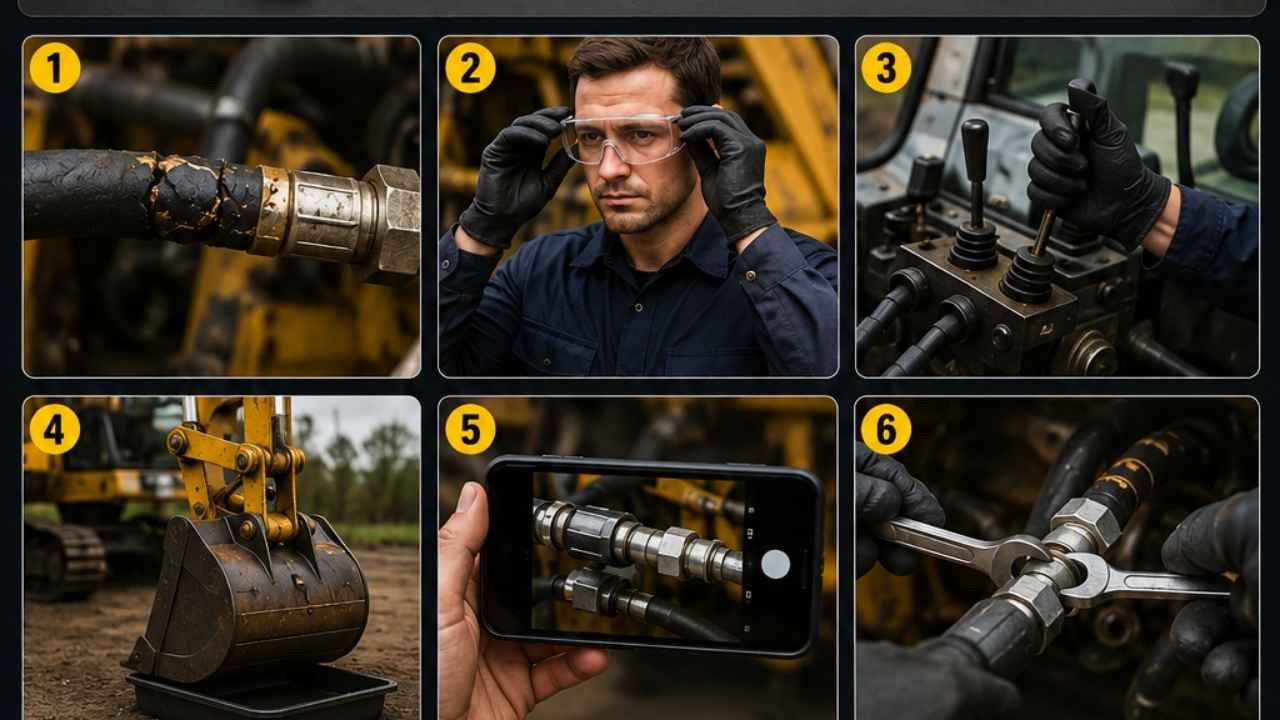
Start with a careful visual inspection. Look for cracked rubber, wet spots, bulges, loose fittings, damaged clamps, rubbing marks, or visible fluid leaks. Also check nearby components because a hose may fail due to friction, incorrect routing, vibration, or a damaged guard.
Mark the problem area before taking anything apart. This will help you confirm whether only the hose needs replacement or whether hydraulic fittings, clamps, guards, or mounting hardware also need attention.
Put on Protective Gear
Do not begin the repair without proper protection. Wear gloves, goggles, long sleeves, and durable pants. Hydraulic fluid can be messy and hazardous, especially if it sprays unexpectedly.
If hydraulic fluid contacts your skin, wash the area immediately. If it gets into your eyes or mouth, seek medical help right away. For high-pressure injection injuries, treat the situation as an emergency even if the wound looks small.
Release Hydraulic Pressure
This is the most important safety step. Hydraulic hoses can hold pressure even after the machine is turned off. If you disconnect a pressurized hose, fluid may spray out forcefully.
Follow your owner’s manual to relieve hydraulic pressure correctly. In many machines, this involves shutting down the engine, moving hydraulic controls through all positions, lowering attachments to the ground, and opening the correct relief procedure. The exact process depends on the equipment type.
Never loosen fittings until you are confident the hydraulic pressure has been released.
Turn Off the Machine and Secure Attachments
Shut off the engine completely and remove the key if needed. If you are working on a loader, backhoe, excavator, or similar machine, lower the bucket, boom, blade, or attachment to the ground. This helps prevent unexpected movement.
Place a bucket, drain pan, absorbent pads, or a heavy cloth under the hose area. Some hydraulic fluid will usually drain out when the line is disconnected.
Take Photos Before Removing Parts
Before disassembly, take clear photos of the hose routing, fittings, guards, clamps, and connection points. Hydraulic hoses must be installed correctly. A twisted, stretched, or poorly routed hose may fail again quickly.
If several parts need to be removed, label them as you go. This makes reassembly easier and helps you avoid mistakes.
Remove the Damaged Hydraulic Hose
Most hydraulic fittings require two wrenches. Use one wrench to hold one side of the fitting steady and the second wrench to loosen the other side. This prevents unnecessary stress on the hose, fitting, or hydraulic component.
If the coupling is stuck, apply a small amount of penetrating lubricant and give it time to work. Avoid forcing the fitting too aggressively, because damaged threads can create a bigger repair problem.
Once both ends are loose, remove the damaged hydraulic hose carefully. Keep the ends pointed away from your face and body in case trapped fluid remains inside.
Clean the Fittings and Connection Points
Dirt is one of the biggest enemies of hydraulic systems. Before installing the new hose, clean the fittings, ports, and surrounding area with a rag and suitable cleaner. Make sure no debris enters the hydraulic system.
If the old fittings are worn, cracked, corroded, or damaged, replace them instead of reusing them. Reusing bad hydraulic hose fittings can lead to leaks, pressure loss, or another hose failure.
Install the New Hose Correctly
Compare the replacement hose with the old one. Check the length, diameter, pressure rating, fitting style, and connection type. A replacement hydraulic hose should match the system requirements, not just “look close enough.”
Install the new hose following the same routing shown in your photos. Avoid sharp bends, twisting, rubbing points, and contact with hot surfaces. Reinstall all clamps, guards, pins, and protective covers in their original positions.
Tighten the fittings securely, but do not overtighten them. Too much force can damage threads, crush sealing surfaces, or create future leaks.
Test the Hydraulic System
After everything is connected, start the machine and operate the hydraulic controls slowly. Watch the repaired area carefully from a safe distance. Do not use your hand to check for leaks.
Look for dripping fluid, pressure loss, abnormal hose movement, or swelling. If you notice a leak, shut the machine down, release pressure again, and inspect the connection.
When to Call a Hydraulic Hose Repair Professional?
You should contact a professional if the hose is hard to access, the fittings are damaged, the equipment still holds pressure, or the machine is critical to your work schedule. Heavy equipment downtime can cost money fast, especially on farms, construction sites, and commercial jobs.
A skilled hydraulic hose repair professional can identify the right hose, match the fittings, check for related damage, and complete the repair safely. In some cases, the problem may also involve hydraulic cylinders, pumps, valves, or contaminated fluid—not just the hose itself.
Replacing a hydraulic hose is not always complicated, but it must be done carefully. The key steps are simple: inspect the damage, wear protective gear, release pressure, remove the damaged hose, clean the fittings, install the correct replacement, and test the system safely.
When in doubt, do not take risks with high-pressure hydraulics. A proper repair protects both your equipment and your safety.