Contents
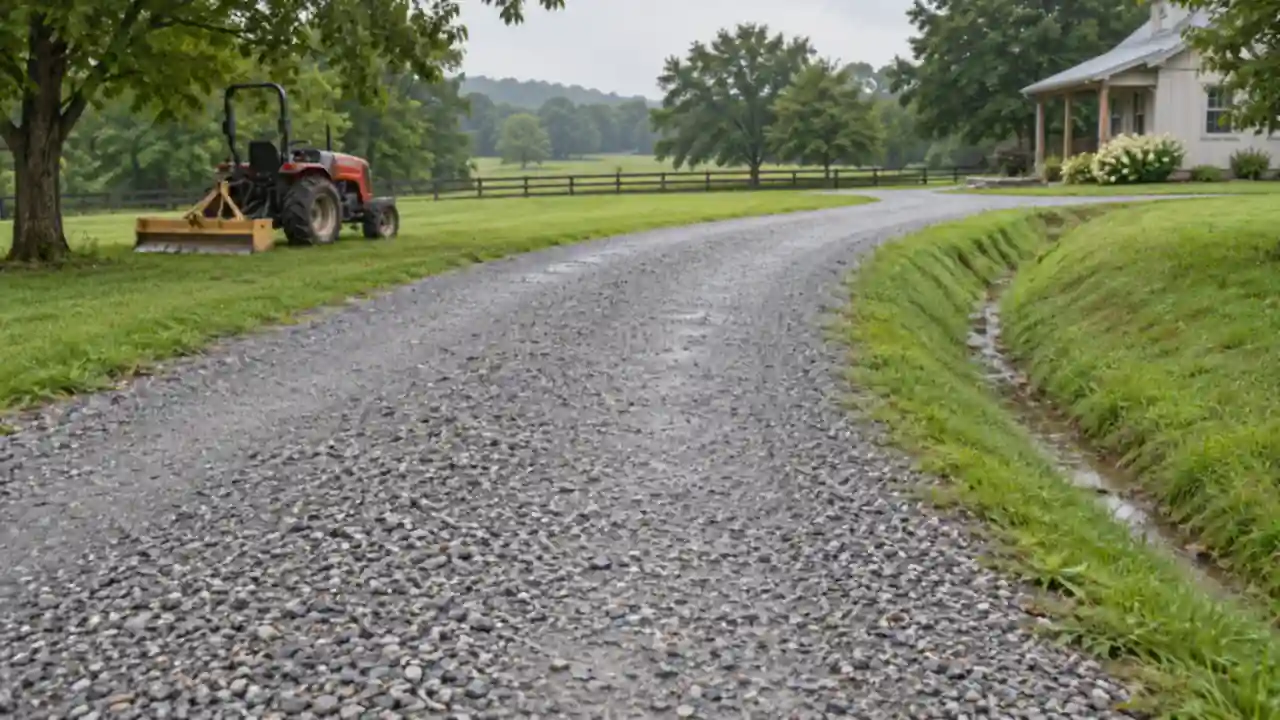
Routine gravel driveway maintenance starts with watching where water goes. After a heavy rain, once it’s safe to walk the driveway, look for gravel collecting at the edges, water sitting in wheel tracks, and runoff crossing or following the drive. Take a few photos so you can see what changes over time. If the same spot keeps washing out or turning soft, have the drainage and base assessed before ordering more stone.
Gravel driveway maintenance checklist
A shaded driveway that sees regular truck traffic won’t wear the same way as a short, open driveway used by two cars. Use these checkpoints to decide when yours needs attention:
- After heavy rain: From stable ground, photograph standing water, sediment trails, and gravel that has moved. Note where water enters and where it can leave. Look at the visible ends of any driveway culvert for debris or erosion.
- After heavy deliveries or construction: Check turns and wheel tracks for fresh ruts, exposed base, or ridges of loose gravel. Note which areas changed, especially if trucks used the driveway while it was wet.
- Before the wet season: Walk the length of the driveway when it’s safe. Check whether leaves, grass, or a ridge of displaced stone is blocking the path that runoff normally takes.
- Before ordering gravel: Mark the thin sections and the areas that still have usable stone. Measure the affected sections and ask the contractor to confirm the material and quantity after inspecting the surface.
The Federal Highway Administration’s guidance on unpaved roads explains why water needs a way off the surface without causing erosion. The right shape and drainage outlet depend on your property.
When to grade, add gravel, or request a repair
Grade when the surface has shifted but usable material remains. Shallow washboarding or ridges of displaced gravel can be a reason to reshape the surface. Ask how the operator will handle the edges so water doesn’t get trapped on the drive. If you own a tractor, our land plane and box blade comparison explains how the two attachments fit different jobs.
Add gravel when the surface material is missing. Flag bare or thin stretches. Ask whether the quote includes delivery only or also spreading, shaping, and compaction. A delivered pile of gravel and a finished driveway are different jobs.
Request a repair assessment when damage keeps coming back. A recurring pothole, a soft section that sinks under traffic, or a washout that exposes the base deserves a closer look. Show the contractor your photos from after the rain. Our gravel driveway repair guide explains how to compare proposals that address the surface, base, or drainage.
What to include in a maintenance quote
Tell the operator your town and county, the driveway’s length and width, where a truck or trailer can turn, and which sections need work. Include a wide photo showing the slope and drainage outlet, plus a close photo of each trouble spot. If the driveway is shared, agree on the work limits with the other owners before scheduling.
Ask for a breakdown of grading, gravel, delivery, and separate drainage work. For recurring service, ask what conditions would trigger a return visit and whether a new minimum charge applies. If the work affects a public road entrance or nearby culvert, check with the road authority before changing how water drains.
Use the local tractor service directory to compare coverage, or describe your driveway maintenance project. An inquiry does not book a contractor or guarantee a quote.
How often to grade a gravel driveway
There’s no fixed schedule that fits every driveway. Inspect yours after heavy rain or truck traffic and consider grading when loose ridges, shallow washboarding, or a change in the surface shape starts affecting drainage. If the same section keeps failing, find out why before paying for another pass.