
Contents
A 12 volt hydraulic pump wiring diagram is one of the most searched topics for dump trailers, liftgates, snow plows, and electric hydraulic power units. That makes sense because wiring problems are very common with 12V hydraulic systems.
A good pump will not work correctly if the battery is weak, the ground is bad, the solenoid is failing, or the power cables are too small.
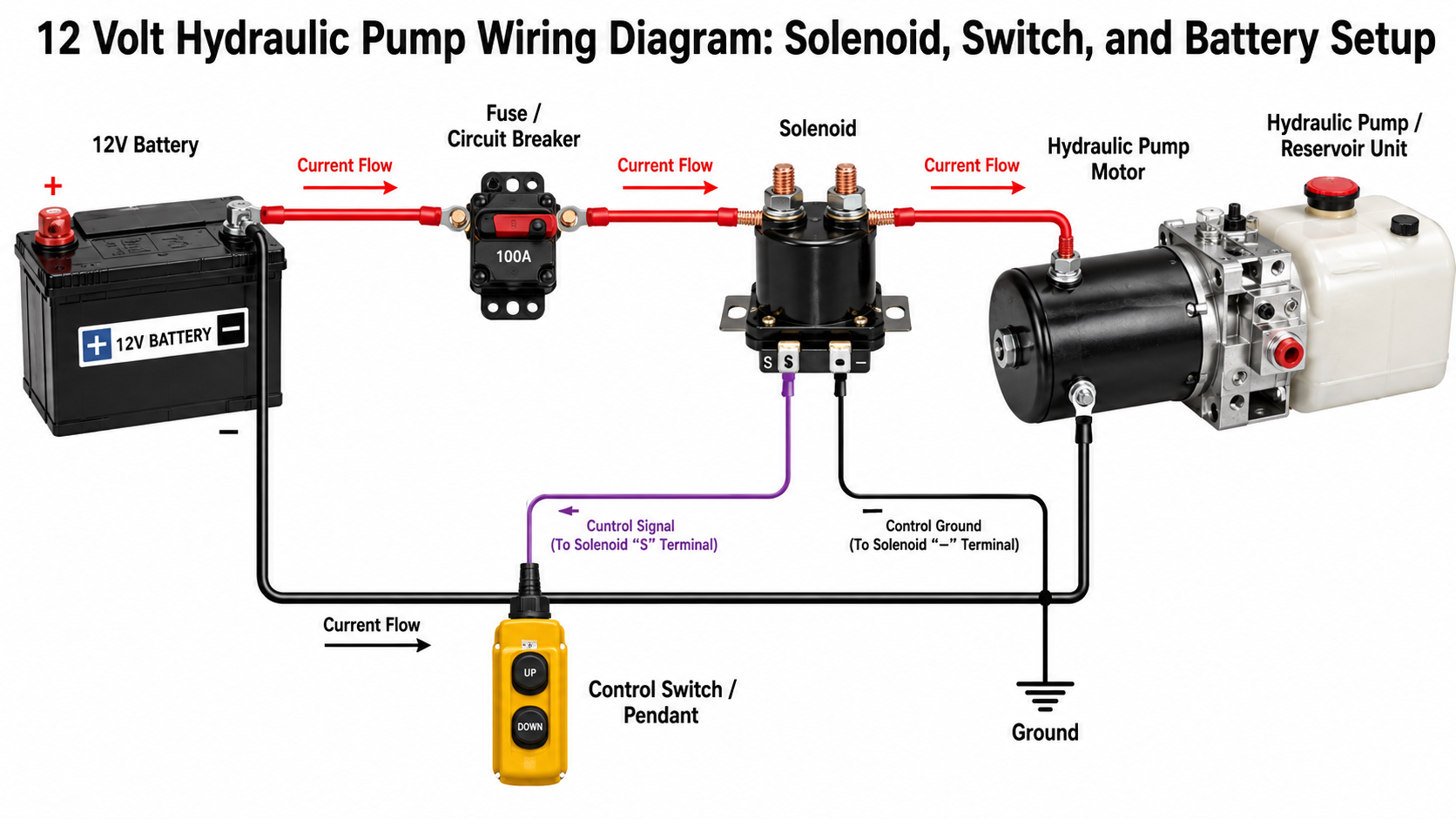
Basic 12 Volt Hydraulic Pump Wiring
Most 12 volt hydraulic pump wiring setups include:
-
12V battery
-
heavy positive cable
-
heavy ground cable
-
solenoid
-
pump motor
-
control switch
-
optional remote
-
fuse or breaker if required
A basic wiring path looks like this:
Battery positive → solenoid → pump motor → ground → battery negative
The control switch activates the solenoid, and the solenoid sends power to the motor.
What Does the Solenoid Do?
The 12 volt hydraulic pump solenoid acts like a heavy-duty electrical switch. The control button or remote does not usually carry full motor current. Instead, it sends a small signal to the solenoid. The solenoid then allows high current to flow from the battery to the pump motor.
If you press the button and only hear a click, the solenoid may be working but the motor is not receiving enough power. It could also mean the solenoid contacts are bad.
Single Acting Solenoid Wiring
A 12 volt single acting hydraulic pump wiring diagram is usually simpler than a double acting system. A single acting dump trailer pump often has a motor solenoid for raising and a release valve for lowering.
Typical functions:
-
up button powers the motor
-
down button opens the release valve
-
gravity lowers the bed
A single acting solenoid 12 volt hydraulic pump wiring diagram usually shows battery power, motor solenoid, ground, control switch, and release valve wiring.
Double Acting Pump Wiring
A double acting pump may have additional valve coils or a control pendant that operates both directions. The wiring can be more complex because the pump must control extend and retract functions.
This is common on:
-
snow plows
-
bale beds
-
hydraulic arms
-
powered tilt systems
A solenoid 12 volt hydraulic pump wiring diagram for these systems may include multiple coils, switches, and valve functions.
How to Wire a 12 Volt Hydraulic Pump?
If you are trying to learn how to wire a 12 volt hydraulic pump, start with these basics:
-
Use a fully charged 12V battery.
-
Use proper cable size for high amperage.
-
Connect positive battery cable to the solenoid input.
-
Connect solenoid output to the pump motor terminal.
-
Connect motor ground to battery negative or clean frame ground.
-
Wire the control switch according to the pump diagram.
-
Check all terminals for tight, clean connections.
-
Test briefly without overload.
Do not use light-gauge wire for the main motor cables. These motors can draw high current.
Common Wiring Problems
Many pump failures are actually wiring failures.
Common problems include:
-
weak battery
-
corroded terminals
-
poor ground
-
loose connections
-
bad solenoid
-
damaged switch
-
undersized cables
-
broken remote wire
-
blown fuse or breaker
-
motor drawing too many amps
If the pump runs slowly, check voltage under load. A battery may show 12V at rest but drop too low when the pump starts.
Dump Truck and Liftgate Wiring
Searches like dump truck 12 volt hydraulic pump wiring diagram and 12 volt hydraulic pump wiring waltco liftgate wiring diagram usually involve more specific systems. Liftgates and dump trucks may have safety switches, limit switches, control boxes, and special wiring harnesses.
In those cases, use the exact equipment diagram. Generic wiring diagrams may not include all safety circuits.
Safety Tips
Before working on wiring:
-
disconnect the battery
-
lower hydraulic equipment safely
-
support raised beds or arms with mechanical stands
-
avoid shorting battery cables
-
use eye protection
-
keep hands away from moving parts
-
never rely only on hydraulics to hold a load
Hydraulic systems can move suddenly if wiring is connected incorrectly.
A 12 volt hydraulic pump wiring diagram helps you understand the battery, solenoid, switch, and motor connections. Most problems come from weak batteries, poor grounds, bad solenoids, or loose cables.
If the system is simple, basic troubleshooting may solve the issue. If it is a liftgate, dump truck, or plow with special controls, use the exact manufacturer wiring diagram.