
Contents
When a 12 volt hydraulic pump stops working, the first reaction is often to blame the pump. But many problems come from the battery, solenoid, wiring, ground connection, fluid level, or control switch.
A good 12 volt hydraulic pump troubleshooting process starts with the simple things before replacing expensive parts.
Common Symptoms
A failing or poorly performing pump may show these symptoms:
-
pump does not run
-
motor clicks but does not spin
-
pump runs but cylinder does not move
-
slow lifting
-
weak lifting under load
-
pump overheats
-
hydraulic fluid foams
-
solenoid clicks repeatedly
-
motor draws too many amps
-
remote does not work
-
cylinder drifts down
Each symptom points to a different possible cause.
Pump Does Not Run
If the pump does not run at all, check:
-
battery charge
-
main fuse or breaker
-
ground cable
-
positive cable
-
solenoid
-
control switch
-
remote wiring
-
motor terminals
A weak battery is one of the most common causes. A pump motor needs high current, especially when lifting a heavy load.
Solenoid Clicks but Pump Does Not Run
If the solenoid clicks but the motor does not run, the issue may be:
-
weak battery
-
bad ground
-
corroded cable
-
failed solenoid contacts
-
bad motor
-
loose terminal
-
seized pump
Use a voltmeter to check voltage at the motor while pressing the switch. If voltage drops heavily, you may have a battery or cable problem.
Pump Runs but Does Not Lift
If the motor runs but the cylinder does not move, check:
-
low hydraulic fluid
-
wrong valve position
-
air in the system
-
clogged suction screen
-
worn pump
-
relief valve stuck open
-
damaged cylinder
-
broken coupler
-
wrong hose connection
Low fluid is common, especially on systems with leaks.
Slow or Weak Lifting
A 12 volt hydraulic pump that lifts slowly may have:
-
low voltage
-
undersized cables
-
weak motor
-
worn pump
-
thick cold fluid
-
overloaded equipment
-
low fluid level
-
air in the hydraulic system
-
restricted hose or fitting
Do not ignore slow operation. It may be an early warning sign.
Amp Draw Problems
Searches for 12 volt hydraulic pump amp draw usually come from users trying to diagnose electrical load. High amp draw can be caused by heavy load, low voltage, bad motor bearings, a failing pump, or hydraulic restriction.
If the pump draws too much current, cables may heat up, fuses may blow, or the motor may fail. Always use cable size and protection recommended for the pump.
Hydraulic Pump Parts to Check
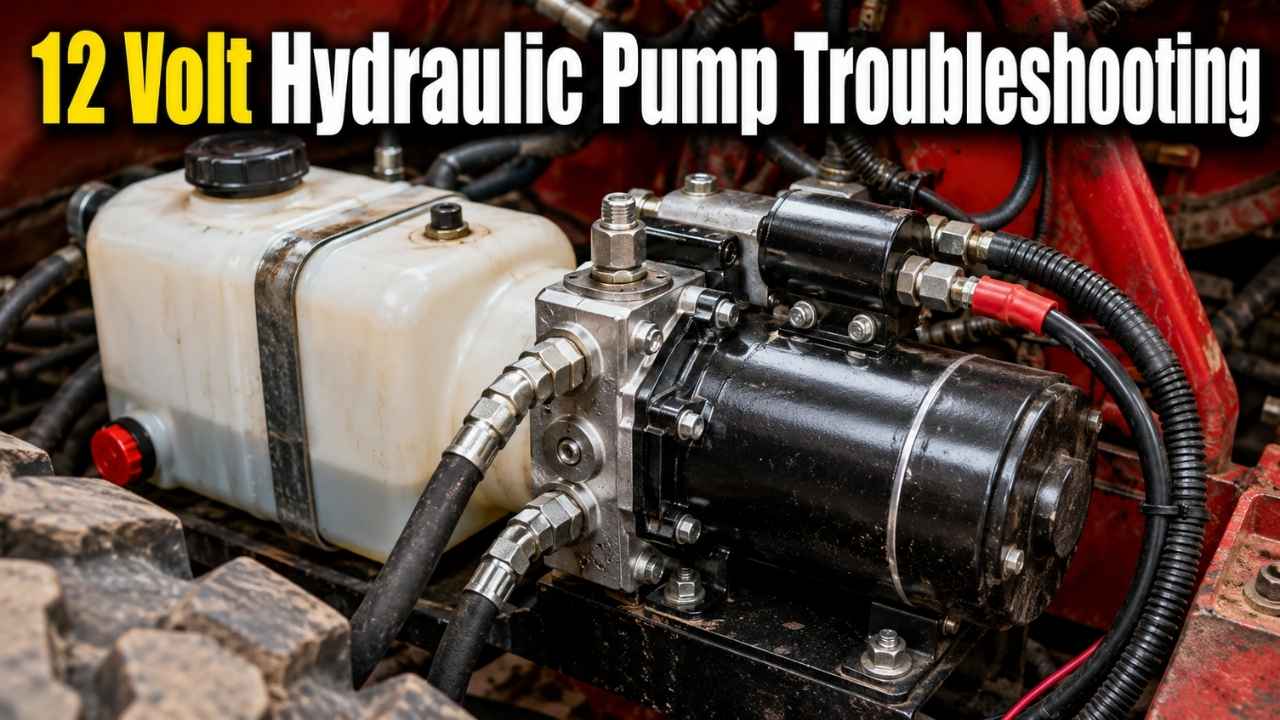
Important 12 volt hydraulic pump parts include:
-
motor
-
solenoid
-
reservoir
-
pump body
-
relief valve
-
control valve
-
switch
-
remote
-
hydraulic ports
-
seals
-
suction tube
-
filter or screen
If one part fails, the whole 12 volt hydraulic pump system may stop working.
Fluid and Reservoir Problems
Check the reservoir if the pump sounds noisy or the cylinder moves unevenly. Low fluid can pull air into the system, causing foaming and weak operation.
Also check for:
-
dirty fluid
-
water contamination
-
wrong hydraulic oil
-
cracked reservoir
-
loose suction tube
-
blocked vent cap
Hydraulic oil condition matters more than many people think.
Wireless Remote Problems
A 12 volt hydraulic pump with wireless remote is convenient, but it adds another possible failure point. If the wired switch works but the wireless remote does not, check the remote battery, receiver, wiring, and pairing procedure.
When to Replace the Pump
Replace the pump if:
-
the motor is good but pressure is low
-
internal pump wear is confirmed
-
the unit leaks badly
-
replacement parts cost too much
-
the reservoir or valve body is damaged
-
the system is undersized for the job
Sometimes replacing the whole unit is cheaper than chasing multiple small failures.
Good 12 volt hydraulic pump troubleshooting starts with the basics: battery, ground, solenoid, wiring, fluid level, and switch. Many pump problems are electrical, not hydraulic.
Before buying a new pump, test voltage under load, inspect cables, check the fluid, and confirm the solenoid is working. A simple loose ground or weak battery can make a good pump look bad.