Contents
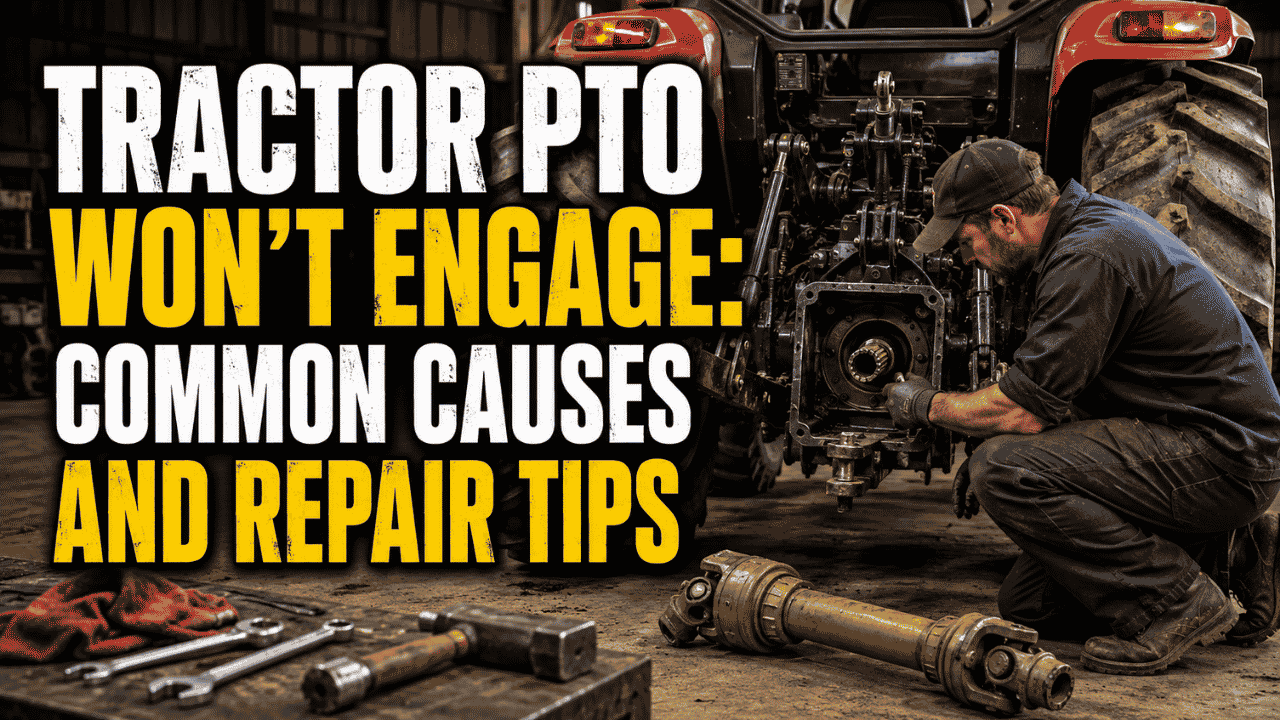
When a tractor PTO won’t engage, your mower, baler, tiller, brush hog, post hole digger, or other powered implement becomes useless. The PTO, or power take-off, transfers engine power from the tractor to an attachment. If it stops working, the cause may be simple or serious depending on the tractor type.
Common causes include safety switch problems, clutch adjustment, low hydraulic fluid, damaged linkage, electrical faults, worn PTO clutch discs, or internal transmission issues.
Identify the PTO Type First
Before troubleshooting, it helps to know what type of PTO your tractor has. Older tractors may use a mechanical PTO lever. Some models use a live PTO with a two-stage clutch. Newer tractors may have an independent PTO controlled by a switch, solenoid, or hydraulic clutch pack.
A mechanical PTO problem is often related to linkage or clutch adjustment. An electric-over-hydraulic PTO problem may involve switches, wiring, solenoids, hydraulic pressure, or clutch packs.
Knowing the system makes troubleshooting much easier.
Check the PTO Safety Switches
Modern tractors use safety systems to prevent accidental PTO engagement. If a safety switch fails or does not detect the correct condition, the PTO may not turn on.
Common safety-related areas include the seat switch, brake switch, neutral switch, clutch switch, and PTO switch itself. If the operator leaves the seat, some tractors automatically shut off the PTO. If the seat switch is faulty, the tractor may think no one is sitting there.
Do not permanently bypass safety systems. Instead, inspect wiring, connectors, switch mounting, and obvious damage.
Inspect the PTO Switch or Lever
If your tractor has an electric PTO switch, the switch can wear out over time. A bad switch may feel loose, fail to click properly, or work only sometimes. Corrosion inside the switch or connector can also stop current from reaching the PTO solenoid.
For tractors with a mechanical PTO lever, check whether the lever moves normally. If it feels loose or disconnected, the linkage may be worn, bent, or broken.
A lever that will not move may indicate binding, internal damage, or an implement driveline that is under tension.
Check Hydraulic Fluid and Pressure
Some independent PTO systems use hydraulic pressure to engage the PTO clutch. If hydraulic fluid is low, dirty, or restricted by a clogged filter, the PTO may not engage properly.
This is especially likely if you also notice weak hydraulics, slow loader movement, noisy hydraulic operation, or poor 3 point hitch performance.
Check the fluid level and condition. Replace old hydraulic fluid and filters according to the service schedule. If the fluid looks milky, water may be present. If it smells burnt, the system may have overheated.
Clutch Adjustment Problems
On tractors with a two-stage clutch, pressing the clutch pedal halfway may stop tractor movement while keeping the PTO running, while pressing it fully stops both. If the clutch is out of adjustment, the PTO may grind, fail to engage, or fail to stop.
A tractor PTO clutch problem can also show up as slipping under load. For example, the PTO may spin with no attachment connected but stop when running a mower or tiller.
Clutch adjustment varies by tractor model, so follow the service manual carefully.
PTO Shaft and Implement Problems
Sometimes the tractor PTO works, but the implement or driveline is the real issue. A seized implement gearbox, damaged PTO shaft, stuck slip clutch, or broken shear pin can make it seem like the PTO is not engaging.
Disconnect the implement and test the PTO carefully with no load. If the PTO shaft spins normally without the implement, inspect the attachment.
Always shut off the tractor before touching the PTO shaft or implement driveline.
Electrical and Solenoid Issues
For electric PTO systems, wiring problems are common. Look for blown fuses, damaged wires, corroded connectors, or a faulty PTO relay. A bad solenoid may also prevent the PTO clutch from engaging.
If you hear a click when turning on the PTO but the shaft does not spin, the solenoid may be trying to work but the clutch may not be applying. If there is no click at all, the issue may be electrical.
A multimeter can help confirm whether power is reaching the PTO circuit.
Worn PTO Clutch or Internal Damage
If all external checks look good, the problem may be inside the tractor. Worn clutch discs, damaged gears, broken shafts, failed bearings, or internal hydraulic leaks can prevent engagement.
Internal PTO repairs can be expensive and usually require experience. If you suspect internal damage, avoid forcing the lever or repeatedly engaging the PTO under load. That can make the damage worse.
A tractor PTO won’t engage for many reasons, but the best approach is simple: check safety switches, PTO controls, hydraulic fluid, filters, wiring, clutch adjustment, and the implement before assuming internal failure. Many PTO problems are caused by small electrical or linkage issues, but slipping, grinding, or no movement under load may point to a worn clutch or internal repair.
Always treat the PTO with respect. It is one of the most powerful and dangerous systems on a tractor.