Contents
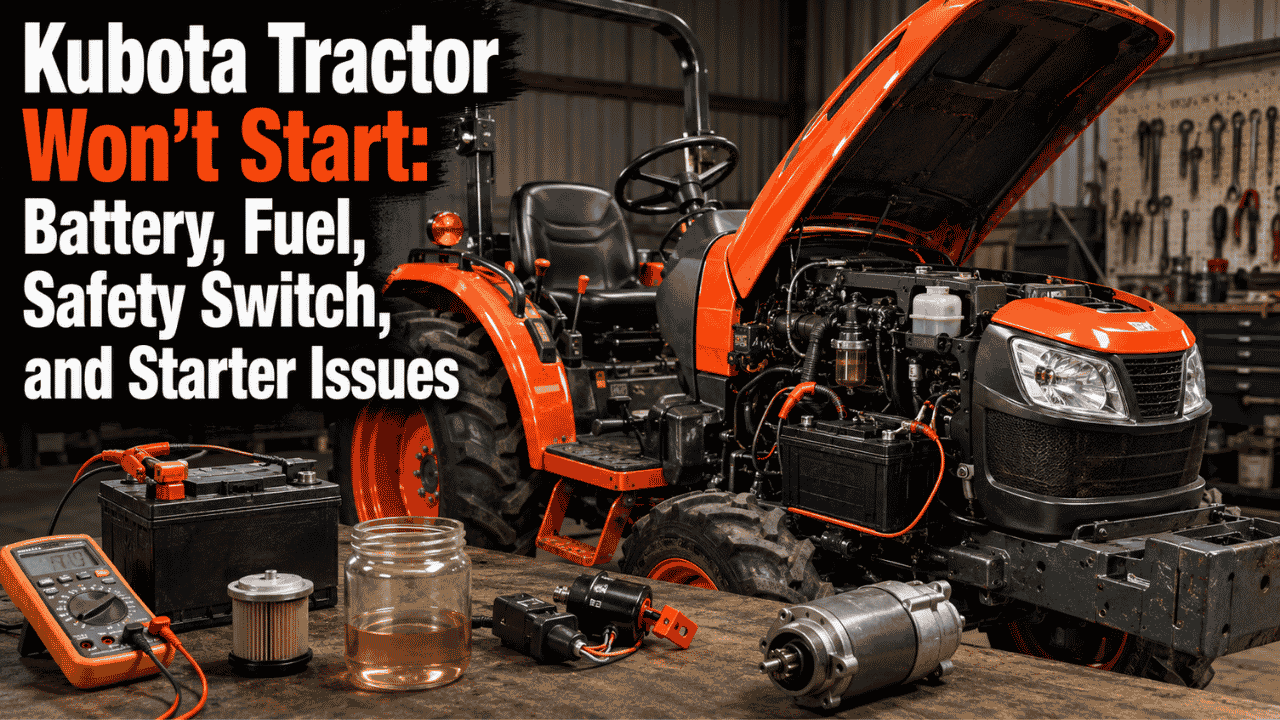
A Kubota tractor won’t start for a few common reasons: a weak battery, bad fuel flow, dirty filters, faulty safety switches, starter trouble, or glow plug issues on diesel models. The good news is that many starting problems can be checked without advanced tools. Before replacing expensive parts, it is smart to start with the basics and move step by step.
Kubota tractors are known for reliability, but even a dependable machine can refuse to start after sitting for a while, working in cold weather, or running with old fuel. Whether you own a compact Kubota, a sub-compact BX model, or a larger utility tractor, the starting system depends on clean fuel, strong electrical power, good compression, and working safety controls.
Check the Battery First
A weak or dead battery is one of the most common reasons a Kubota tractor won’t crank. If you turn the key and hear clicking, slow cranking, or nothing at all, the battery should be the first thing you inspect.
Check the battery terminals for corrosion, loose cables, or damaged wires. Even a good battery can act dead if the connections are dirty. Clean the terminals, tighten the clamps, and try again. If the lights are dim or the starter turns slowly, test the battery voltage. A fully charged 12-volt battery should usually read around 12.6 volts when the engine is off.
Cold weather can also make a weak battery fail. If the tractor starts after a jump but dies again later, the battery may not be holding a charge, or the alternator may not be charging properly.
Look at the Fuel System
If the engine cranks but does not start, the issue may be fuel-related. Diesel engines need clean fuel and proper flow to fire correctly. Old diesel, water in the fuel, clogged filters, or air in the fuel lines can all cause starting trouble.
Start by checking the fuel level. It sounds simple, but fuel gauges can stick or read incorrectly. Then inspect the fuel shutoff valve if your Kubota model has one. Make sure it is open.
A clogged fuel filter can limit flow and keep the engine from starting. If the tractor has been sitting for months, the fuel may have become contaminated. Replacing the fuel filter and bleeding air from the system may solve the issue.
If you recently ran the tractor out of fuel, air may be trapped in the lines. In that case, follow the fuel bleeding procedure in your owner’s manual.
Safety Switch Problems
Many Kubota tractors use safety switches to prevent accidental starting. These switches may be located under the seat, near the clutch pedal, PTO control, brake pedal, or hydrostatic transmission pedal.
If the tractor does nothing when you turn the key, a Kubota safety switch problem could be the reason. Make sure the PTO is fully disengaged, the transmission is in neutral, and the clutch or brake pedal is pressed as required.
A seat safety switch can also cause problems, especially if the wiring is loose or the switch is worn. Do not permanently bypass safety switches. They are there to prevent serious injury. However, checking whether one is loose, dirty, or misaligned can help identify the issue.
Starter and Solenoid Issues
If you hear a single click when turning the key, the starter solenoid may be engaging, but the starter motor may not be turning properly. This can happen because of a weak battery, bad ground connection, worn starter, or failing solenoid.
Inspect the ground cable where it attaches to the frame or engine block. A poor ground can mimic a bad starter. If the battery is strong and all cables are clean and tight, the starter may need testing.
A failing starter often gets worse over time. You may notice occasional no-start problems before it completely fails.
Glow Plug Problems in Cold Weather
Diesel Kubota tractors rely on glow plugs to help start in cold conditions. If your tractor cranks normally but struggles to fire when temperatures drop, the Kubota glow plugs may not be heating properly.
Watch the glow plug indicator on the dash. If the light does not come on, or the tractor only starts after several long cranking attempts, the glow plug circuit may need inspection. Faulty glow plugs, a bad relay, wiring damage, or a blown fuse can all create hard-start issues.
Using the correct cold-start procedure is also important. Give the glow plugs enough time to heat before cranking the engine.
Air Filter and Engine Breathing
A severely clogged air filter can make starting difficult, especially if the engine is already weak or the weather is cold. Remove the air filter and inspect it for dirt, dust, oil, or rodent nesting.
Do not run the tractor without a filter for normal use, but checking the condition of the filter can help diagnose airflow problems. A clean engine needs clean air just as much as clean fuel.
When to Call a Mechanic?
If your Kubota tractor still will not start after checking the battery, fuel, safety switches, starter, and glow plugs, the issue may be more serious. Possible causes include low compression, injector problems, injection pump failure, damaged wiring, or ECU-related faults on newer models.
At that point, professional diagnosis is safer and often cheaper than replacing parts blindly.
A Kubota tractor not starting does not always mean a major repair. In many cases, the cause is something simple: weak battery, dirty fuel filter, loose cable, engaged PTO, or faulty safety switch. Start with the easy checks first, work through the system logically, and avoid unnecessary part replacement. With basic troubleshooting, many Kubota starting problems can be fixed quickly and safely.