
Contents
- 1 How Does a Skid Steer Power Rake Work?
- 2 What Is a Skid Steer Power Rake Used For?
- 3 Skid Steer Power Rake for Soil Preparation
- 4 Skid Steer Power Rake for Gravel Driveways
- 5 When Should You Use a Skid Steer Power Rake?
- 6 Should You Rent or Buy a Skid Steer Power Rake?
- 7 Is a Skid Steer Power Rake Worth It?
A skid steer power rake is one of those attachments that many operators do not fully appreciate until they use one on the right job. At first glance, it may look like just another landscaping tool. But once you see how quickly it can clean up rough ground, level soil, remove small rocks, and prepare a site for seeding, it becomes clear why so many contractors, property owners, and landscapers rely on it.
If you have ever tried to prepare a yard with a bucket, landscape rake, shovel, and a lot of patience, you already know how tiring that work can be. A bucket can move dirt, but it does not always leave a clean finish. It may push rocks around, leave clumps behind, or create uneven spots that need more work later. A power rake for skid steer is different because it actually works the surface. It breaks up material, separates debris, and helps leave the ground smoother and more consistent.
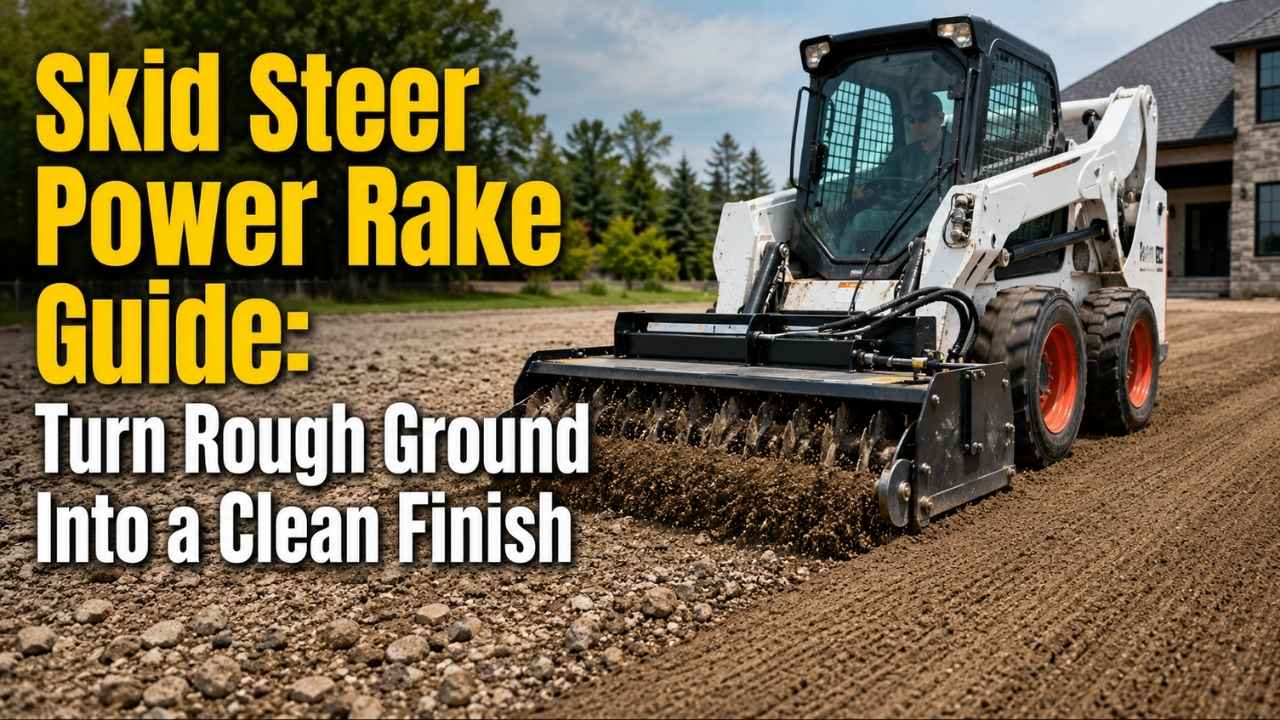
So, what does a skid steer power rake do? In simple terms, it uses a rotating drum fitted with strong teeth, often carbide teeth, to loosen compacted soil, pull out small rocks, remove debris, and level rough areas. It is especially useful for landscaping, driveway repair, construction cleanup, lawn renovation, and soil preparation.
How Does a Skid Steer Power Rake Work?
A skid steer power rake attachment connects to the skid steer’s hydraulic system. Once the hydraulic flow powers the attachment, the drum begins to rotate. As the operator moves the machine forward or backward, the teeth on the drum work into the top layer of soil, gravel, or loose material.
This rotating action is what makes the tool so effective. Instead of simply dragging across the ground, the power rake agitates the surface. It can break apart clods of dirt, loosen compacted topsoil, pull small stones upward, and spread material more evenly.
Many models also include hydraulic angle adjustment. This allows the operator to angle the rake left or right while working. Why does that matter? Because it helps move rocks, roots, grass clumps, and debris into a windrow on one side. That makes cleanup much easier. Instead of chasing debris all over the jobsite, you can guide it into a neat row and remove it more efficiently.
For landscaping contractors, this feature can save a lot of time. For homeowners or landowners doing their own property work, it can make a difficult job feel much more manageable.
What Is a Skid Steer Power Rake Used For?
A power rake skid steer attachment is useful for several different jobs. It is commonly used in landscaping, construction cleanup, grading, soil conditioning, and gravel maintenance.
Some of the most common uses include:
- Preparing yards before seeding
- Cleaning up rough ground after construction
- Removing small rocks and roots
- Leveling topsoil
- Restoring gravel driveways
- Breaking up compacted surface soil
- Preparing areas for sod
- Renovating lawns
- Cleaning debris from job sites
- Smoothing uneven ground
One of the biggest advantages of a skid steer power rake is that it helps create a finished surface. For example, if a new home has just been built, the surrounding yard may be full of tire tracks, clumps of clay, rocks, roots, and leftover debris. Trying to clean that up by hand can take days. With the right power rake, the job can often be completed much faster and with better results.
Skid Steer Power Rake for Soil Preparation
Soil preparation is one of the strongest uses for this attachment. If you are getting an area ready for grass seed, you need more than just loose dirt. The surface should be reasonably smooth, free of large debris, and loose enough for seed-to-soil contact.
A skid steer power rake can help create that condition. It breaks up the top layer, pulls rocks and debris to the surface, and leaves a more workable seedbed. This is why many landscapers use power rakes before seeding new lawns.
However, it is important to understand its limits. A power rake is best for surface preparation. If the ground is extremely hard, deeply compacted, or full of large rocks, you may need another attachment first. A tiller, box blade, soil conditioner, or grading attachment may be needed depending on the condition of the site.
Skid Steer Power Rake for Gravel Driveways
A skid steer power rake for gravel can also be useful for driveway maintenance. Gravel driveways often develop ruts, potholes, washboarding, and uneven spots over time. A power rake can loosen the surface layer and help redistribute loose gravel.
It can also pull larger stones or debris into a windrow, making the driveway look cleaner and more even. While it may not replace a land plane or box blade for every driveway job, it can be a great tool for light restoration, surface cleanup, and final smoothing.
For best results, the gravel should not be too deeply compacted. If the driveway is extremely hard, another grading tool may be needed first. But for routine maintenance, a power rake can be very effective.
When Should You Use a Skid Steer Power Rake?
You should consider using a skid steer power rake attachment when the job requires surface cleaning, light grading, soil conditioning, or debris removal. It is especially useful when you want a cleaner finish than a bucket can provide.
Good situations for using one include:
- After construction work
- Before planting grass seed
- When restoring a rough yard
- When removing small rocks from topsoil
- When cleaning up roots and debris
- When leveling loose soil
- When refreshing gravel surfaces
It is not always the best tool for heavy excavation, deep grading, or breaking very hard ground. If you need to move large amounts of dirt, dig deeply, or reshape a site completely, you may need a bucket, dozer blade, grader, or box blade first. The power rake often shines in the finishing stage.
Should You Rent or Buy a Skid Steer Power Rake?
This depends on how often you plan to use it. For a homeowner or small property owner, a skid steer power rake rental may make the most sense. If you only need it for one lawn renovation, one driveway project, or one cleanup job, renting can save money.
For landscapers, contractors, farms, and property maintenance crews, buying may be the better choice. If you regularly prepare soil, clean up lots, repair driveways, or finish grading jobs, owning a power rake can pay for itself over time.
Before buying, check your skid steer’s hydraulic flow, lift capacity, and attachment compatibility. Not every power rake fits every machine. You should also consider working width, tooth quality, drum condition, hydraulic angle features, and replacement parts availability.
Is a Skid Steer Power Rake Worth It?
For many operators, yes. A skid steer power rake is worth it because it can reduce labor, improve finish quality, and make difficult surface preparation jobs much faster. It is not the cheapest attachment, but it can save serious time when used correctly.
If you only need to move piles of dirt, a bucket may be enough. But if you need to prepare a clean, level, seed-ready or gravel-ready surface, a power rake can make a huge difference.
In the end, the value comes down to the type of work you do. For landscaping, lawn renovation, site cleanup, and gravel maintenance, a skid steer power rake is one of the most useful attachments you can have. It turns rough, uneven ground into a cleaner and more workable surface, and that can make the entire job look more professional.