Contents
Keeping flowers healthy is not always about watering, sunlight, or good soil. Sometimes the real problem shows up at night. Raccoons, squirrels, rabbits, cats, and other small animals can dig through flowerpots, scatter soil, damage roots, and ruin plants that looked perfect the day before.
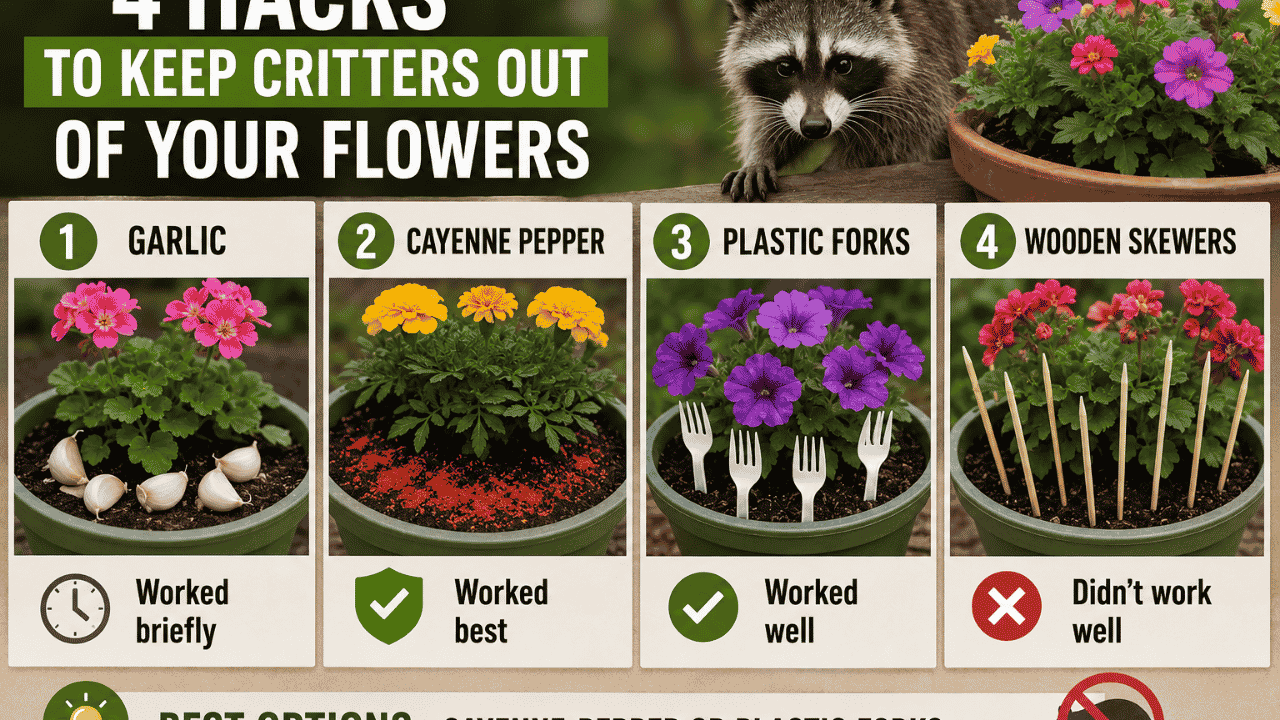
A recent Farm Progress garden column tested four simple home remedies for keeping unwanted critters away from flowers: garlic, cayenne pepper, plastic forks, and wooden skewers. The results were mixed, but two methods stood out as more useful than the others. (Farm Progress)
Why Animals Dig in Flowerpots and Garden Beds
Small animals do not always destroy flowers because they want to eat them. In many cases, they dig because the soil smells interesting, feels soft, hides insects, or gives them a place to search for food. Raccoons, in particular, are known for digging and turning over loose soil, especially at night.
That is why flowerpots can become easy targets. Fresh potting mix, recently watered soil, and young plants can attract curious animals. Once they start digging, roots get exposed, stems break, and the plant may struggle to recover.
Cayenne Pepper Worked Best in the Test
Among the four tested methods, cayenne pepper gave the strongest result. The idea is simple: many animals dislike the smell and irritation caused by hot pepper. When sprinkled around the soil surface, it can make the flowerpot less inviting without changing the appearance too much.
This method also has one big advantage for gardeners: it does not make the flower bed look messy. Unlike forks or sticks, cayenne pepper stays low and blends into the soil. In the Farm Progress test, the pests left the treated bed alone, and the pepper did not need constant reapplication during the short trial.
Still, rain and watering can reduce its effect. For best results, reapply after heavy watering or after strong rain.
Plastic Forks Can Stop Digging
Plastic forks may sound strange, but they can work. The method involves placing forks in the soil with the tines facing upward. This makes it harder and less comfortable for animals to sit, step, or dig in the flower bed.
In the test, forks successfully kept critters away from lantana plants. The downside is obvious: forks sticking out of a flowerpot do not look very attractive. If the goal is to protect a plant quickly, this method can help. If the goal is a clean, decorative garden display, it may not be the prettiest option.
A better-looking alternative could be short bamboo stakes, decorative plant supports, or small garden barriers, but the basic idea is the same: make the soil surface difficult to disturb.
Garlic Helped Only for a Short Time
Garlic seems like it should work because of its strong smell. Many gardeners use garlic as a natural deterrent, and it may help in some cases. However, in this test, garlic only protected the plant briefly. By the second day, the critters returned and continued digging around the geranium.
The lesson is clear: garlic may work better when it is refreshed often. If you try it, crush or chop the garlic and place it around the soil surface. Reapply after watering, rain, or when the smell fades. Garlic is not a “set it and forget it” solution.
Wooden Skewers Were the Least Successful
Wooden skewers were expected to make digging uncomfortable, but they did not perform well in the test. The animals still disturbed the soil, and one petunia was lost.
This does not mean skewers can never work, but they may need to be placed more densely or combined with another method. A few sticks in the soil may not be enough for determined raccoons or squirrels.
Best Method for Protecting Flowers from Critters
Based on the test, cayenne pepper and plastic forks appear to be the most useful low-cost options. Cayenne pepper is better if you want a cleaner look. Forks are better if you need a physical barrier and do not mind the appearance.
For stronger protection, combine methods. For example, sprinkle cayenne pepper on the soil and add a few discreet stakes or barriers around vulnerable plants. If animals keep returning, consider a motion-activated light, a protective wire cover, or a live trap where legal and appropriate.
There is no perfect home remedy for every garden pest. What works against one animal may fail against another. However, cheap garden experiments can still save your flowers before you spend money on bigger solutions.
Start with cayenne pepper if you want the simplest option. Use forks or small barriers if the digging continues. Avoid relying only on garlic unless you are willing to reapply it often. And if your flowerpots are being destroyed night after night, the problem may not be your plants at all — it may be one very stubborn visitor treating your garden like a playground.